Lugano, Switzerland Travel Review
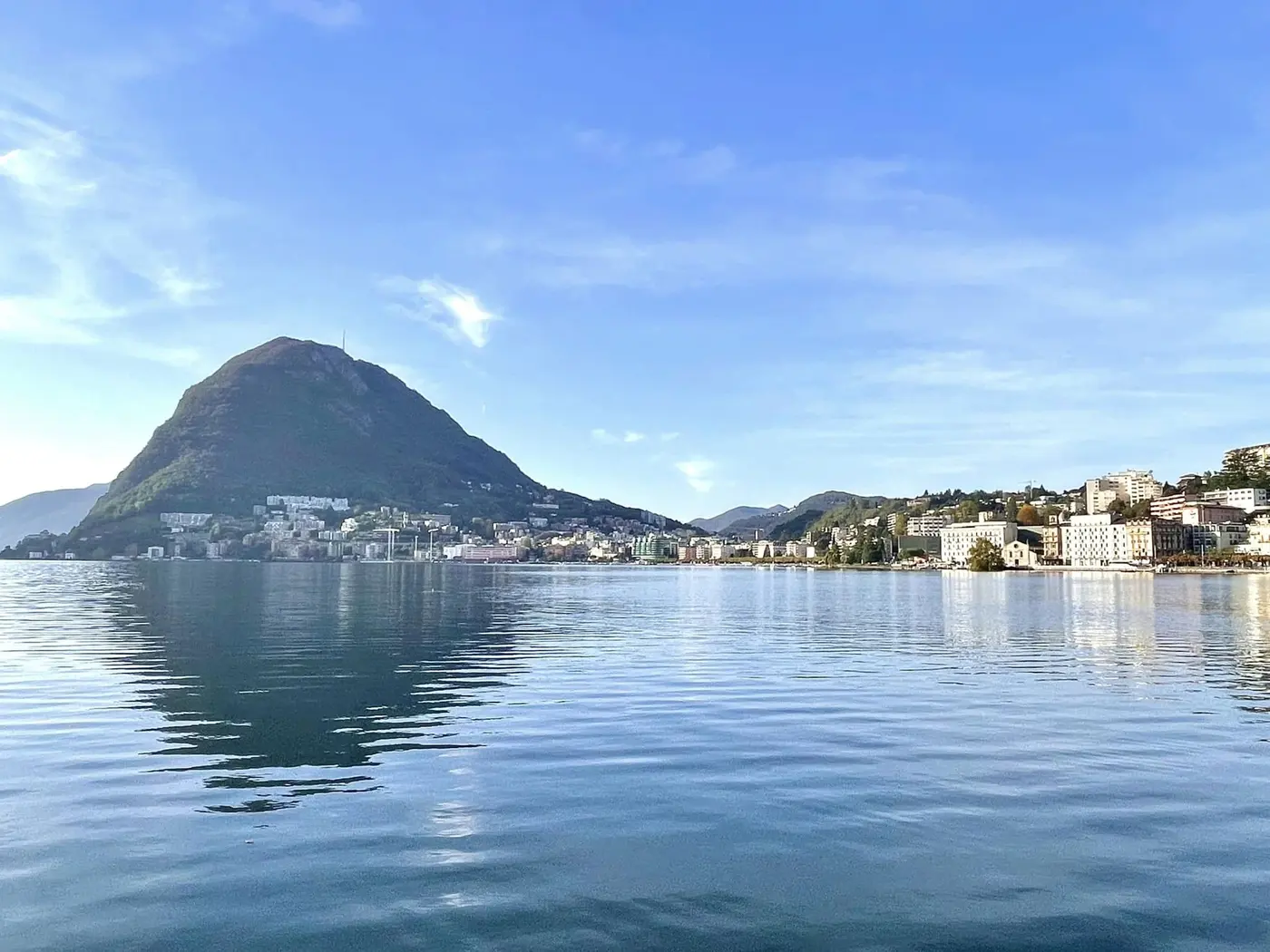
Lugano, Switzerland is not far from Milan. Take a train (Trenord) from Milano Centrale and you will arrive in just over an hour. Several train companies run here, so you can choose. Trenord is the Italian regional train that runs in Lombardy, and at Milan station you must go down to the lowest floor to buy tickets from their office. Trenitalia, the big operator, runs EC trains that are very expensive and also take longer. If you want to visit this town, you can easily do it as a day trip from Milan. Buy your round-trip ticket in Milan, and don't buy it here, as it costs more.
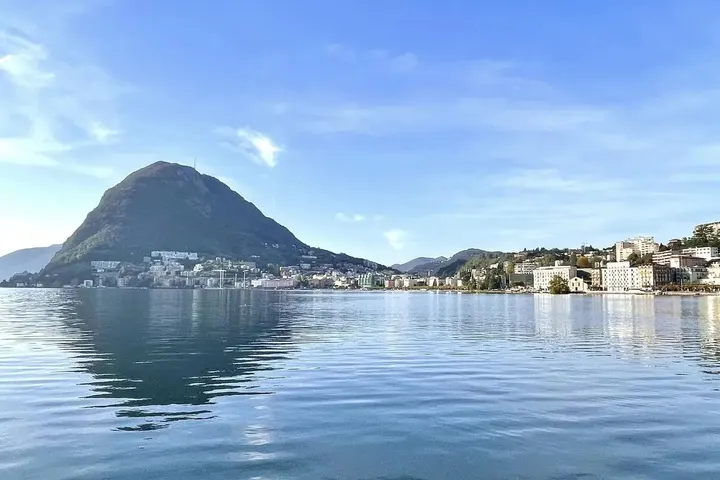
People here speak Italian. The houses are in a northern Italian style but look neat and orderly like Switzerland. Visitors come to stroll around Lake Lugano or take a boat trip. (Boats run to several points on the lake, especially the spots where you board an aerial tram up to viewpoints on the mountain, of which there are two or three. If you don't want to spend money, this is Switzerland, so there are walking paths up from every point.)
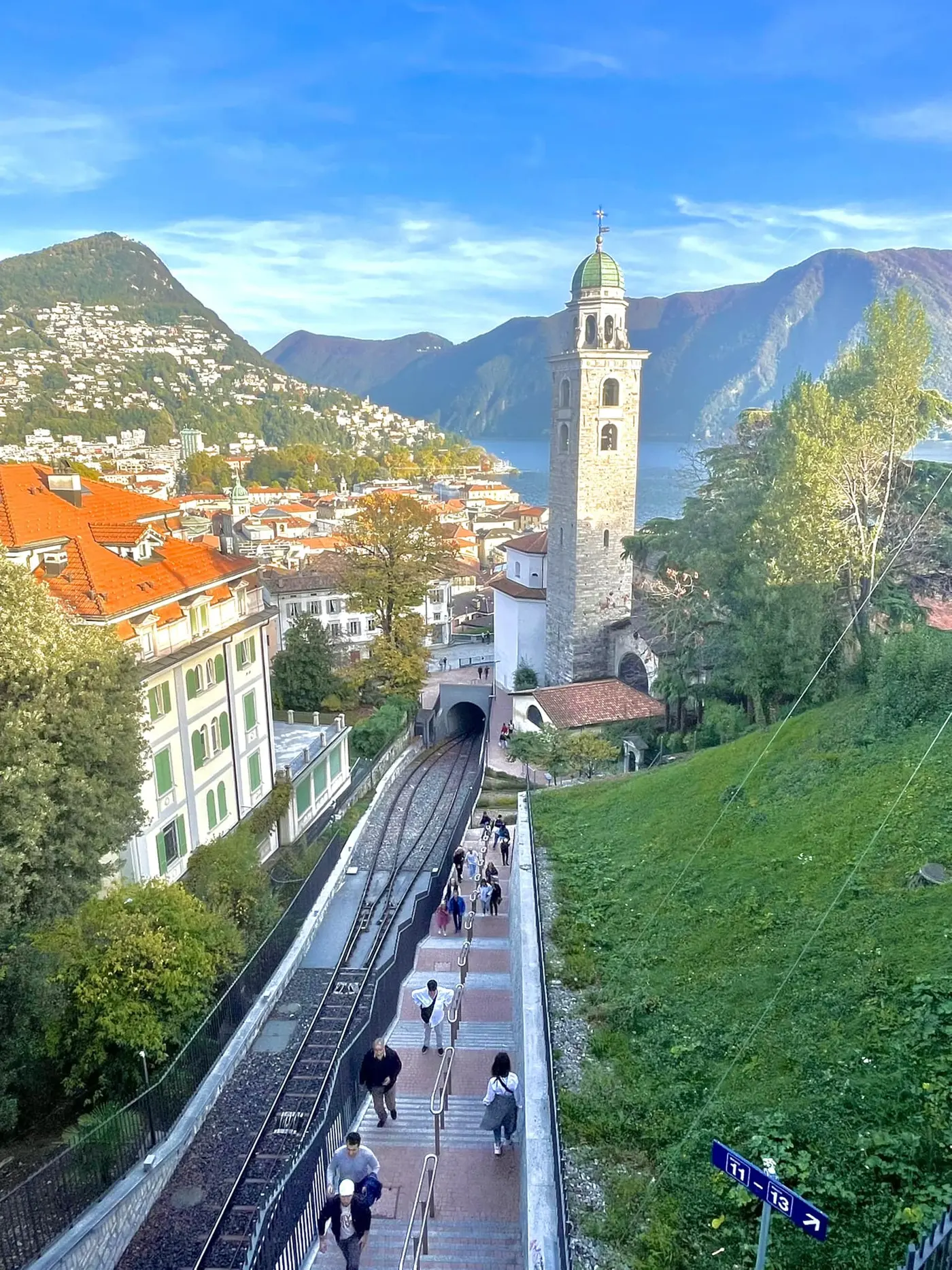
The train station in town is on high ground, so to get to the town center or the lake you have to walk down. In fact, just walk out of the station and cross the road at the bus stop, and you can already see the lake and the whole town.
I had actually planned to stay here for two nights and take the Swiss SBB trains to different cities such as Zermatt, Bern and Zurich. But I don't know what happened: train fares suddenly jumped to double on everything. Every city and every SBB line went up. Even if you book for next year, the price is higher, so it's not just a day-by-day thing. (Maybe it's because electricity costs in Switzerland have risen so brutally.) I went into the SBB office and asked, and the prices they sell at are the same as at the machines or in the app. They recommended buying a Swiss Pass. I looked at the cheapest option, 4 days flexible within 1 month, and wow, it was almost 400 CHF. (If you are visiting this country, rent a car instead. It's much cheaper.)
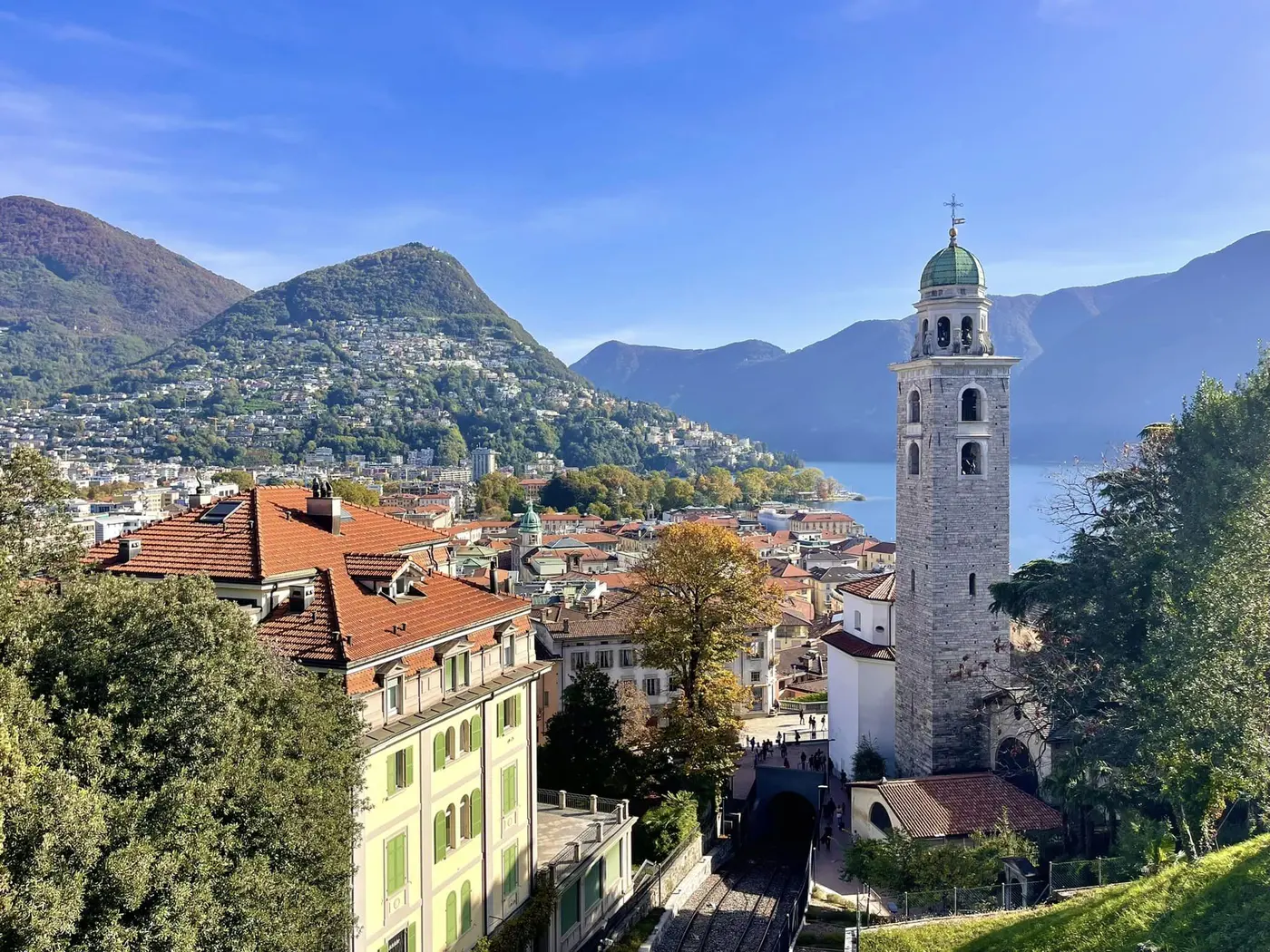
So tomorrow I'm going back to Milan, then taking an Italian train to Zurich and crossing straight into Bavaria. Switzerland, bye bye.
But I'll enjoy some Italian food in Milan for a while first. (The accommodation is cheap, too.)
Planning and Tips for Driving in Europe
First, check carefully which countries are worth driving in and what kind of trip you want.
For example, if you are traveling alone, I don't recommend renting a car at all, because the costs are very high and you pay for everything yourself: rental, insurance,
fuel, tolls and parking. For two or more people, renting a car is another option. But with more than four people you will need to think hard, because you may need a very large vehicle, which is not easy to drive, especially in Italy.
If you have a lot of luggage, such as big rolling suitcases, it is not suitable for traveling in Europe, especially by train. You have to drag your suitcase to and from your accommodation, and in some cities the streets are not flat but go up and down. Add stairs and it becomes a real problem (especially in Italy). Some people even bring cooking equipment and food to cook for themselves. In any case, you should rent a car. Especially if you like accommodation in natural surroundings or nature-focused travel, renting a car is the answer. So if you want to drive, it is best to find travel companions to share the trip.
In some countries car costs are very cheap, including parking, fuel and tolls, but other countries are expensive too. (In Switzerland you almost always have to pay to park. In Austria there are tolls everywhere, especially tunnels, and they are very fiddly. If you drive in from another country, you also have to pay.) Plan well where you will go: will you focus on just one country, or drive across several? Choose the city you rent from carefully. Prices and conditions differ from city to city, even with the same rental company.
If you want to drive for a long time, a month or more, another option is to buy a car, then sell it again after use. You will save a lot on rental and insurance costs. In some countries, such as France, foreigners can buy a car through leasing (without paying the full purchase price upfront), then sell it back to the same leasing company after use. Try looking around, as there are several companies.
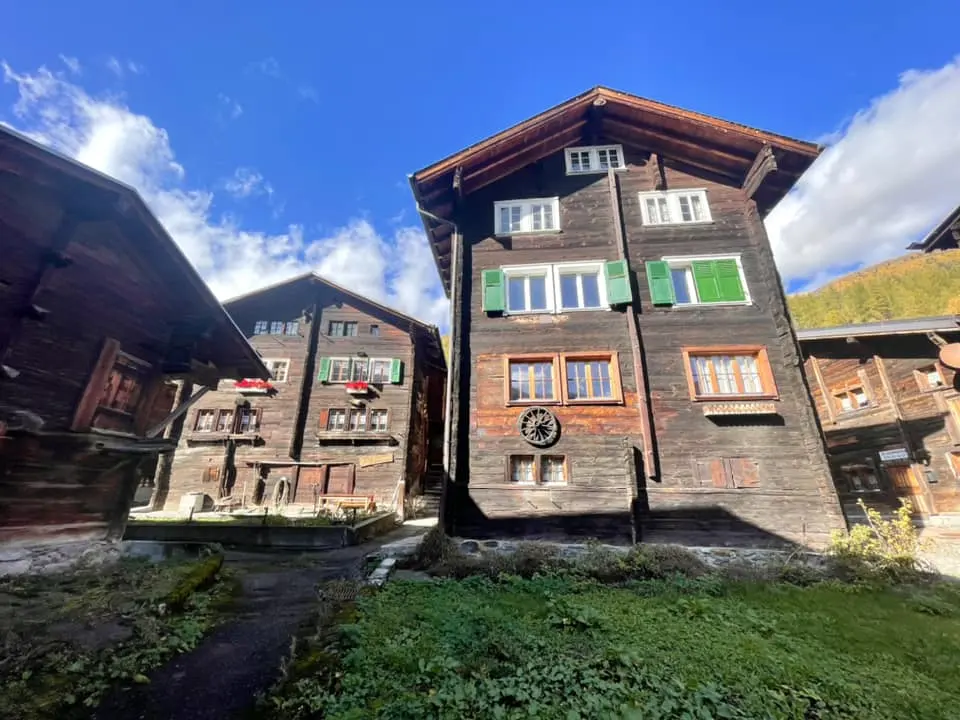
As for motor homes or towed trailers, I strongly advise against them in this region. They are extremely hard to drive, and some roads are definitely off-limits.
Before picking up your car, prepare your driving apps well. I use just three. (maps.me is my main app for navigation and finding routes. Google is for looking up information on many destinations that maps.me doesn't have; once I find one, I copy it into maps.me and navigate from there. Waze is great for real-time information, such as which parking spots have space, traffic conditions and road works.) Learn to use the apps fluently before you actually need them, or it will certainly be chaotic.
If you navigate with your phone, don't forget to bring a phone holder for the car. It is very important, so find one that is not fussy and is easy to adapt. (Each car may mount differently.) Bring two in case the first one doesn't work. And of course, you need a car charger too.
Sunglasses are very important. In Europe the sun is very glaring, especially in the evening and morning, and the car's sun visor can't handle it.
If you have a lot of large luggage, bring a small bag to separate out the essentials you need for each night's stay. It's no fun carrying big bags in and out of the car every day.
Before setting off, prepare information on who to contact if the car has problems in each country. For emergencies, Europe uses a single number: 112. Don't forget that after any accident, even if you just drive into a wall, you must get a report from the police within 24 hours, or the insurance you bought will not cover you.
Besides 112, get the number to call if the car has a problem on the road and how to contact them: the 24-hour emergency number of the rental company, both at the pickup location and at the place where you will return the car. Check carefully what your insurance covers. (The rental company will provide details to read when you book.) See what else you need to buy, such as a child seat, cover for driving to countries outside the contract, roadside assistance, or windshield and tire protection (very useful if your window gets smashed).
A phone is absolutely essential. It must be able to make calls in every European country you will visit. (In fact, using a phone from any country, you get free roaming anywhere in the EU, so there is no need to find a new SIM.)
For planning, I always use a navigation app. I mark each place I will go to and calculate the travel time and the costs I will have to pay. Don't forget that for every place you will go, even your accommodation, you must also mark the parking. Booking accommodation with no parking is a big problem, and so is parking below and then having to climb stairs up a hill to your lodging, so consider your own strength too. In many places in Switzerland, even in a quiet park, you always have to pay to park. Since we have a car, we can easily go off the main route. Don't forget to look for stops and viewpoints (maps.me will show them), and even roadside stops, and plan them in advance. (Many spots require you to leave the toll road, so just exit and loop back. In fact, if you want to drive for sightseeing, I don't recommend the toll roads, because you see almost nothing. The beautiful views are all inside tunnels. If you can, and have time to spare, get off the toll road.)
When renting a car in Europe, don't forget to visit the cities too, but I don't recommend staying in the city. Besides being hard to find parking, it is also expensive. When driving into a city that is not a village, I strongly recommend arriving early in the morning when there are few people, because finding parking will certainly be easier. (Parking is the big problem.) Try to find parking close to the attractions. For the most famous spots, go to them first. After parking, walk around for a short while, then move on to the farther parking spots.
Before you come, find the parking spot in your app and plan it in advance, then drive straight there and park. Almost everywhere in European cities, parking costs money. (Some churches and supermarkets may be free, so check with Waze.) But even if you have to pay, it's worth it compared with parking for free and then walking kilometers into town. (In some big Italian cities, look carefully at where you park. When you look into the car from outside, there must be nothing inside at all, not even a McDonald's bag. Try to find parking in a building or somewhere with CCTV, or you may come back to a smashed window.)
When you have to pay for parking, don't try to avoid it, even if you sit and watch over the car. I have seen people get a ticket right in front of the person watching the car. Fines in some cities are brutal. And of course, check carefully which spots and spaces are no-parking, and don't try to sneak in. (Disabled spaces, spaces by fire hydrants or electrical and telephone boxes, and private parking spaces.) Besides a fine, you may also be towed, which costs a lot of money. When you park, stay inside the lines and never park over them. If you park along the sidewalk, park as close to the curb as possible. (Traffic rules specify a maximum distance in inches.)
There are several ways to pay for parking, depending on the city or place.
If you drive through a barrier, such as at a building or an airport, press the machine to take a ticket and find a space. Before you leave the car, check where you have to go to pay. When you come back, go to the pay machine, insert the ticket and pay, then drive out and insert the ticket or whatever replaces it at the exit. This is the easiest way.
Warning signs in almost every city are in the local language. Take a photo with a translation app and it will translate right over the picture.
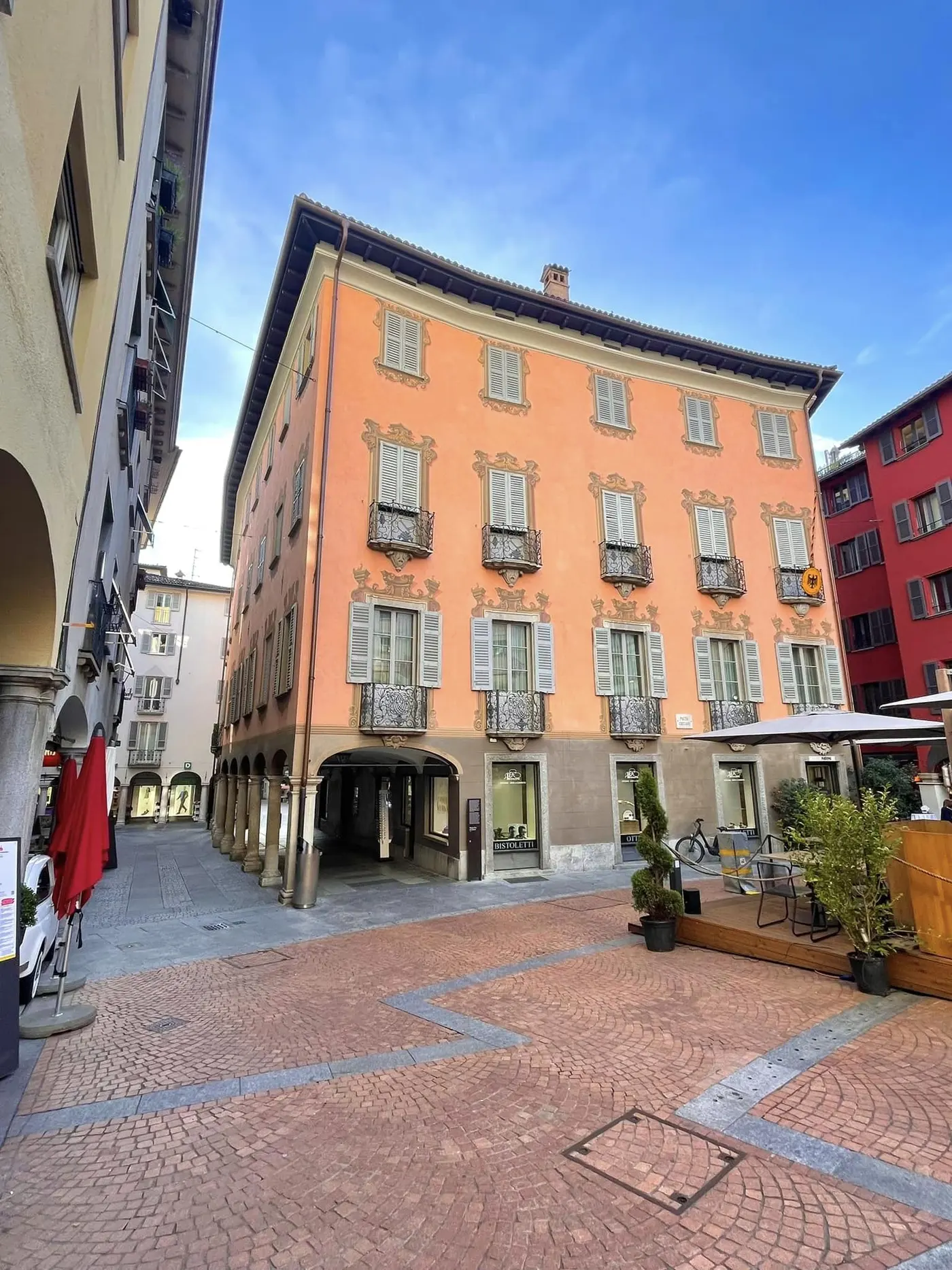
If the parking has a pay machine, there are several ways to use it, depending on the type of machine. Thai people are not very familiar with them, but they are almost the same standard in nearly every country, so give them a try.
Some machines ask you to enter your license plate to pay. (Most take coins or various cards.) You adjust the time up or down on the machine, and the screen shows the amount for that time. Insert your card or coins to pay and you're done. (If an inspector comes, they check from their app, which is linked to the machine, to see until what time that license plate may park. Sometimes there are cameras, so never be complacent.) Machines like this usually have a QR code on them, so you can scan the code and pay online. It's very convenient if you want to extend your time without walking back. Some machines don't ask for the license plate but for the number of the space where your car is parked. (There will be a clear number.)
Old-fashioned machines only ask you to key in the time you want to park, then you pay, and the machine prints a receipt showing the end time. Put this receipt on the dashboard console in front of the car so the person who walks by to check can see it clearly. You should allow extra time. For example, if you think you will park for an hour, pay for another half hour, so you don't have to rush back out of breath to extend. In some countries these machines are right next to the parking space, with one machine per space, and in that case you don't need to put a receipt on the car.
In many cities, especially in Italy, some machines don't work, for example they don't accept cards or the coins won't go in. Don't panic. Walk around to find another machine nearby, as there must be at least one that works.
If you want some excitement from driving, try driving in Italy, especially around famous tourist spots. But if you want to find out how good your skills really are, come and drive in Porto, Portugal. It truly defeats the experts.
Renting a car is not difficult or complicated at all if you know how to drive by the traffic rules, how to rent a car, and how to use it. It is an easy way to travel and lets you go almost anywhere you want. (Unlike public transport.) And the more people you travel with, the cost, even including the car, may be even less than getting around on your own, and you get to see more too. You can reach every village and every viewpoint, walk around big cities comfortably, bring plenty of luggage, and stay in the kind of accommodation you want, and so on.
This is another way to travel, and it isn't limited to Europe. It can be used anywhere (as long as the system supports it), especially in large countries such as the USA, Canada and Australia.
I almost forgot one thing: if you drive, you of course have to refuel. But if you want to rent an EV, many big cities already have electric chargers available. (Look them up on Waze or MAPS.ME.)
I recommend gasoline only. It's easy to fill up, not hard to find, and much cheaper than diesel. You need to learn to refuel yourself, because there is no attendant. Even checking the windshield, inflating the tires or washing the car with a machine, you do everything yourself here.
The big problem with refueling is paying.
Open the car's fuel cap and lift out the fuel nozzle, and every time check that the number on the display has reset to 0. Don't pick up the wrong type of fuel nozzle, or it will be a long and painful story. Before refueling, read how to pay at the pump you will use, for example inserting a credit card. (It must be a credit card, because the machine will put a hold on a certain amount, which debit cards can't do. When you finish, a receipt shows the actual amount. When you check your card statement, it shows only the amount on hold. When the billing cycle arrives, the hold is refunded down to the amount you actually filled, so don't panic. But if your card limit is low, after several holds it may not be enough.) If you want to pay with cash or a travel card, you must find a station with a cashier. (Mostly these are hard to find, as they don't handle fuel at all, unlike in many countries where you tell the cashier the pump number, the amount you want or a full tank, and they reset the pump and set it as you ask.) Insert the nozzle into the car and squeeze the handle and the fuel flows in. Release it wherever you want to stop. If you want a full tank, keep squeezing until the nozzle cuts off. (In Europe there is almost never an automatic lock, so you have to stand and squeeze the handle yourself until done.)
Cr.Tony Thinnakorn Poonvasin
Driving yourself? Book the car here
Compare many rental companies on one page; check the insurance and one-way fees before you book
Partner links · we may earn a small commission when you book, your price stays the same
Planning it yourself?
What independent travellers usually book before they go, from providers that actually work

Thai language, pay in baht
Popular with Thai travellers, Thai-language pages
Hotels near the station and old town, many with free cancellation
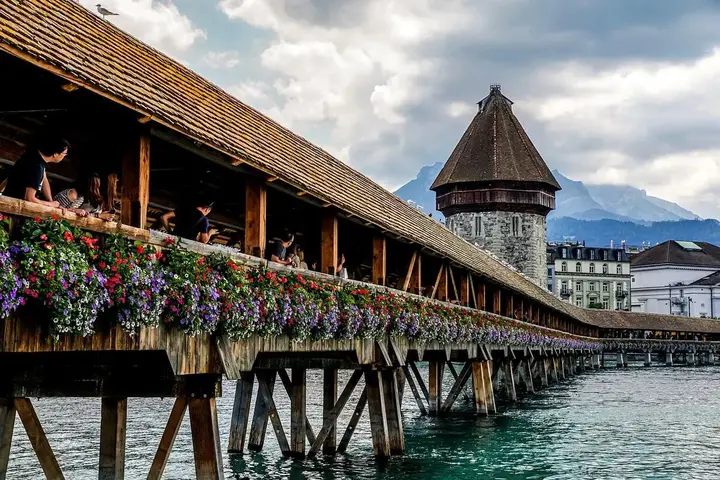
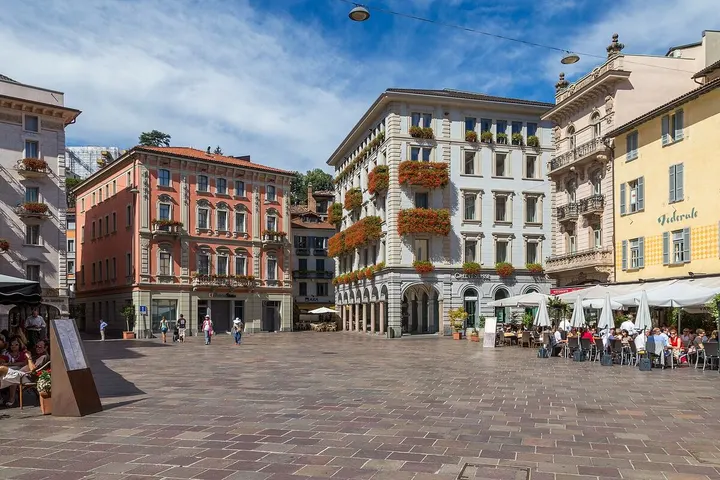 Photo: JoachimKohler-HB · CC BY-SA 4.0 · Wikimedia Commons
City tours with transport and guide, book ahead
Partner links · we may earn a small commission when you book, your price stays the same
Let Rin design a trip for your group