Wat Na Khwai, Nai Mueang Subdistrict, Mueang District, Ubon Ratchathani Province
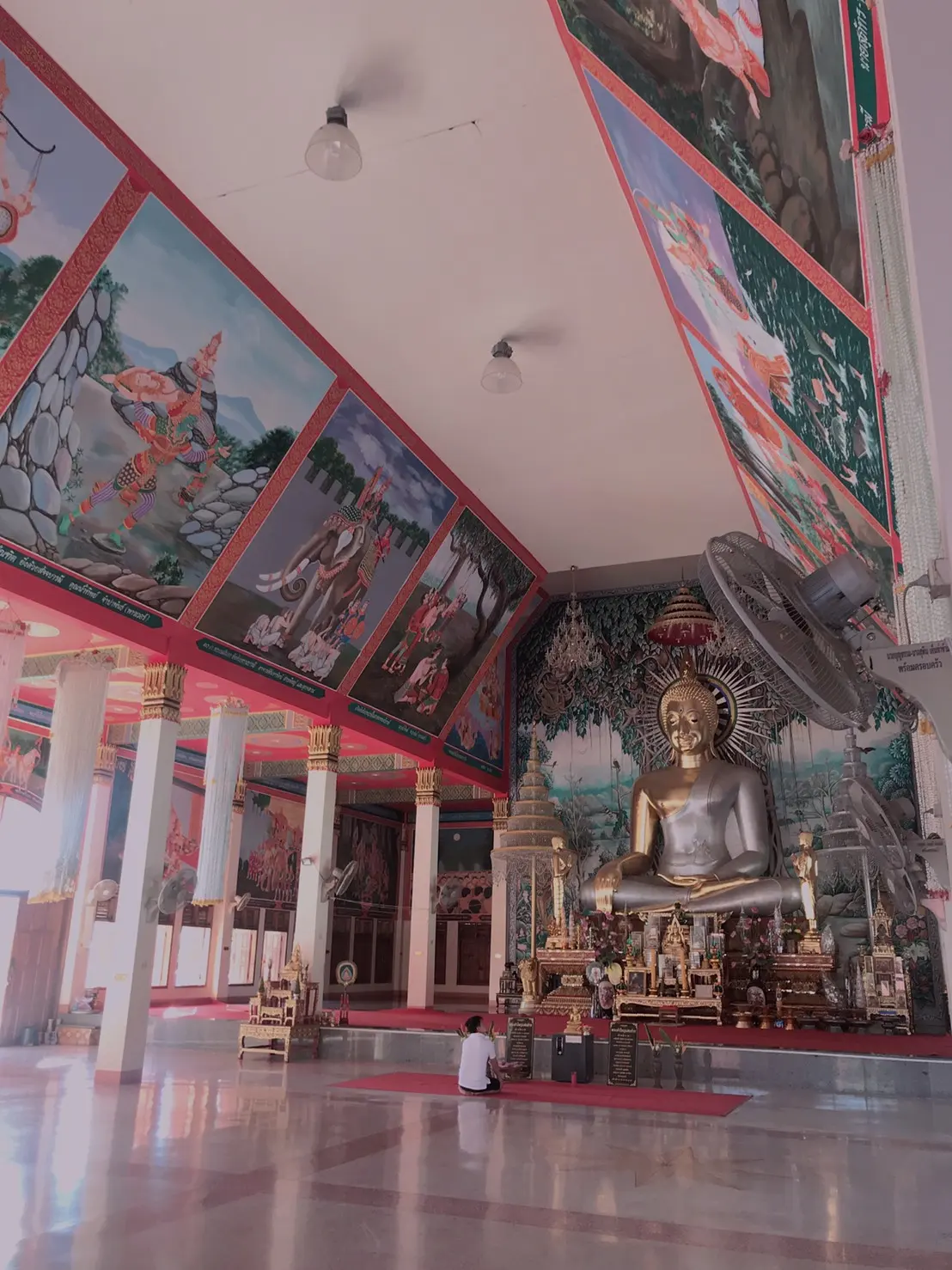
Phra Chao Yai Saen Lan was built in 2011, decorated with 111,109 King Rama IX 1-baht coins. The stucco Buddha image enshrines Buddha relics and is housed inside the sermon hall of Wat Na Khwai.
History of Wat Na Khwai
Originally, Wat Na Khwai was named "Wat Ban Nong Phak Haet", located to the east of present-day Ban Na Khwai, which is north of Wing 21.
There is no record of the exact year Wat Na Khwai was established, but it is estimated to be no less than 200 years old. Originally, Wat Na Khwai had an area of just over 8 rai. Later, 10 local households joined together to build a "sim" (Isan-style ordination hall), with Phra Ajarn Tha, locally known as "Ya Khu Tha", overseeing the construction. The exact year of construction is unrecorded, but it is known that in 1867 it was consecrated with boundary markers (Phatthasima), as recorded in the temple register. Later, Kamnan Phon Asaphon, then the subdistrict headman of Kham Yai Subdistrict, rallied villagers to purchase an additional 5 rai of land to donate to the temple, bringing the total current area to 13 rai, 1 ngan, and 95 square wah.
Directions
From the Ubon Ratchathani Rajabhat University intersection in the city and within the Ubon Ratchathani City Municipality area, take Chayangkun Road heading north for about 1.7 kilometers. Sukha Songkhro Road will be on the right (a U-turn is required to enter this road), then enter the road for about 600 meters to find Wat Na Khwai on the left, located between Soi Sukha Songkhro 9 and Soi Sukha Songkhro 11.
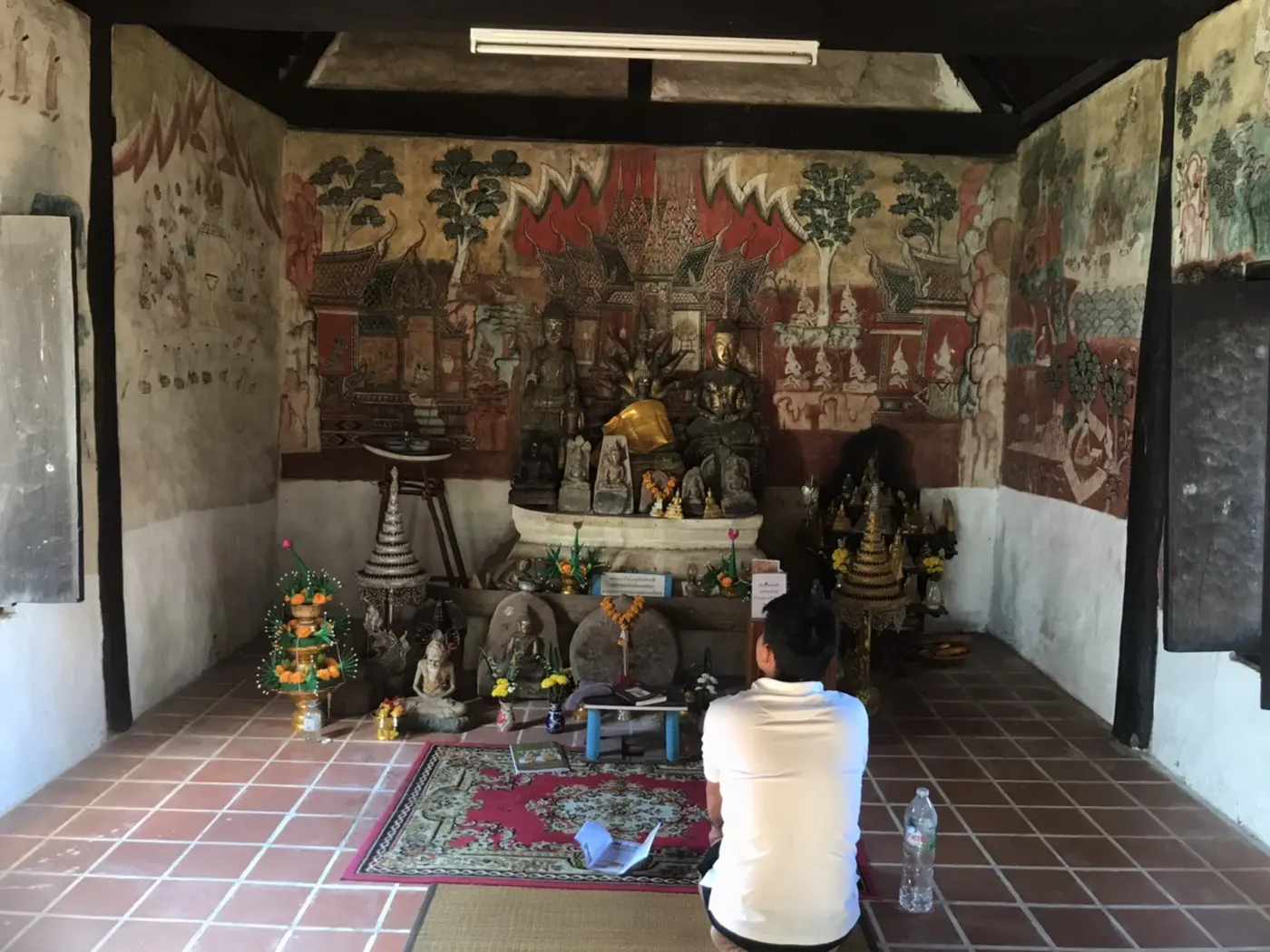
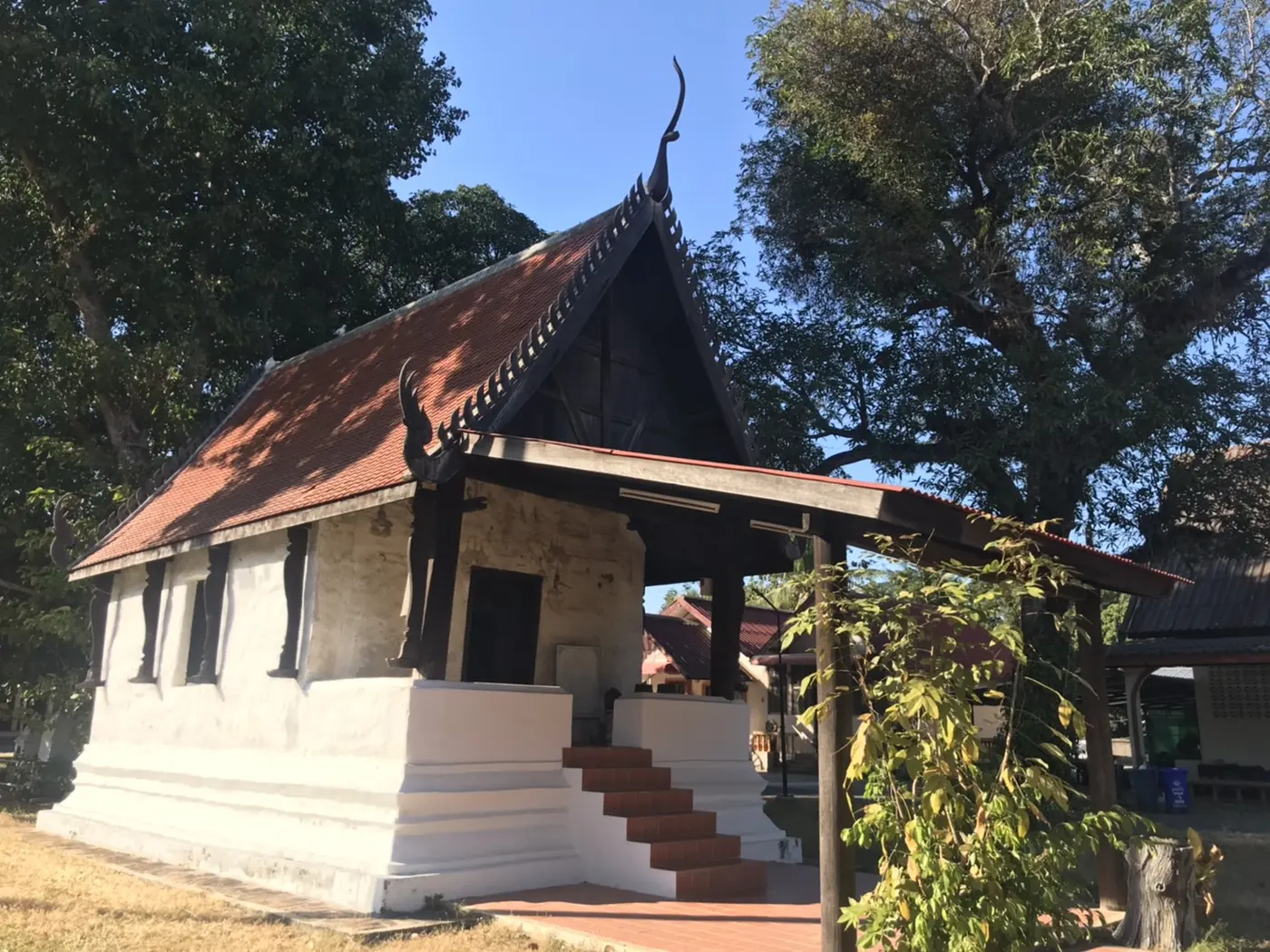
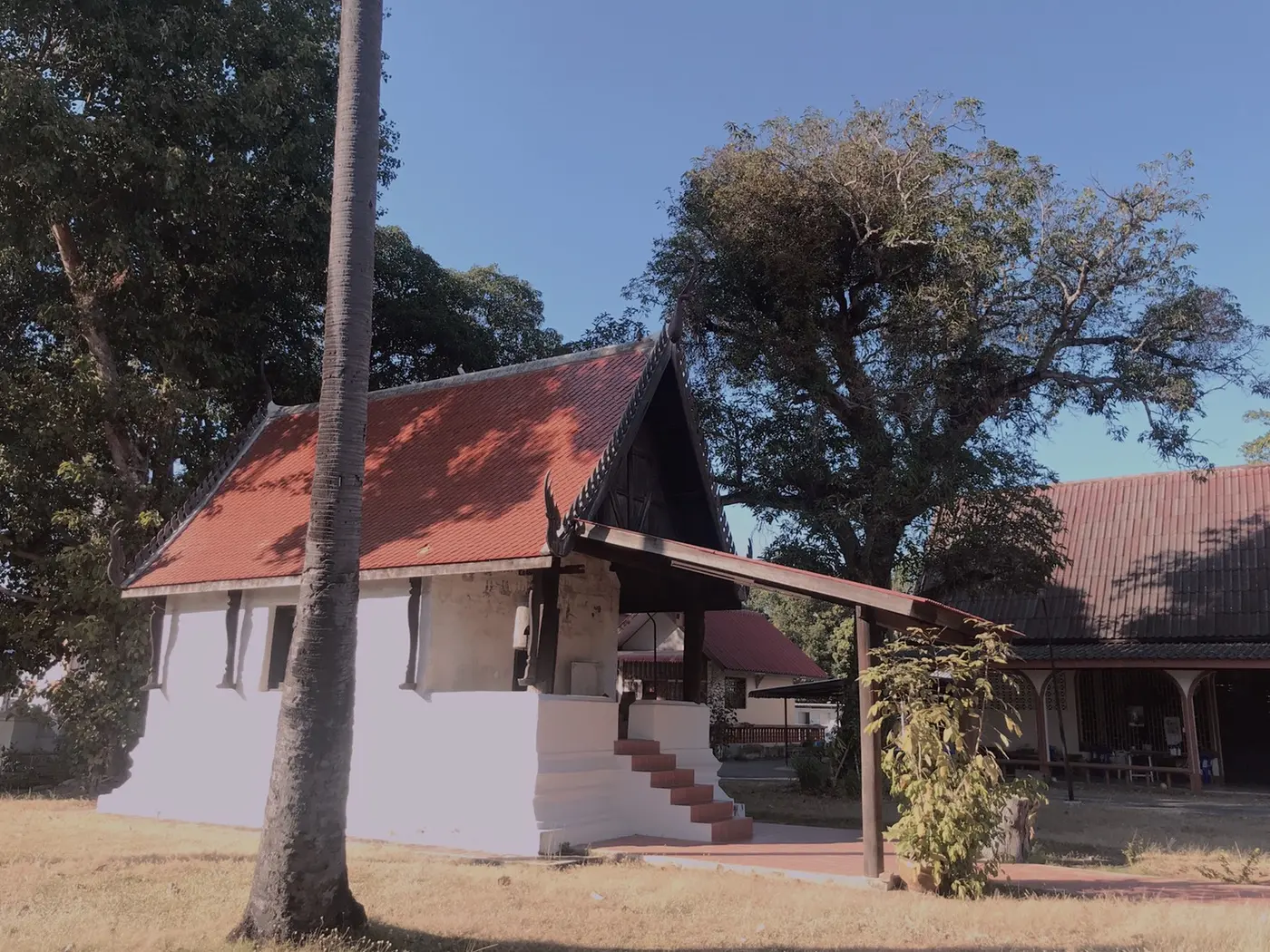
Ordination hall (Sim) Built by Tha Khu Tha and the Na Khwai villagers, the year of construction is unknown. It is a rectangular brick and mortar building with a high curved base, facing east, measuring 5.50 meters wide and 9.00 meters long, with a porch and entrance steps at the front. The north-south side walls have windows, with carved wooden chofah, bai raka, and hang hong. There are carved wooden brackets on the sides of the building, 5 on each side, with sockets.
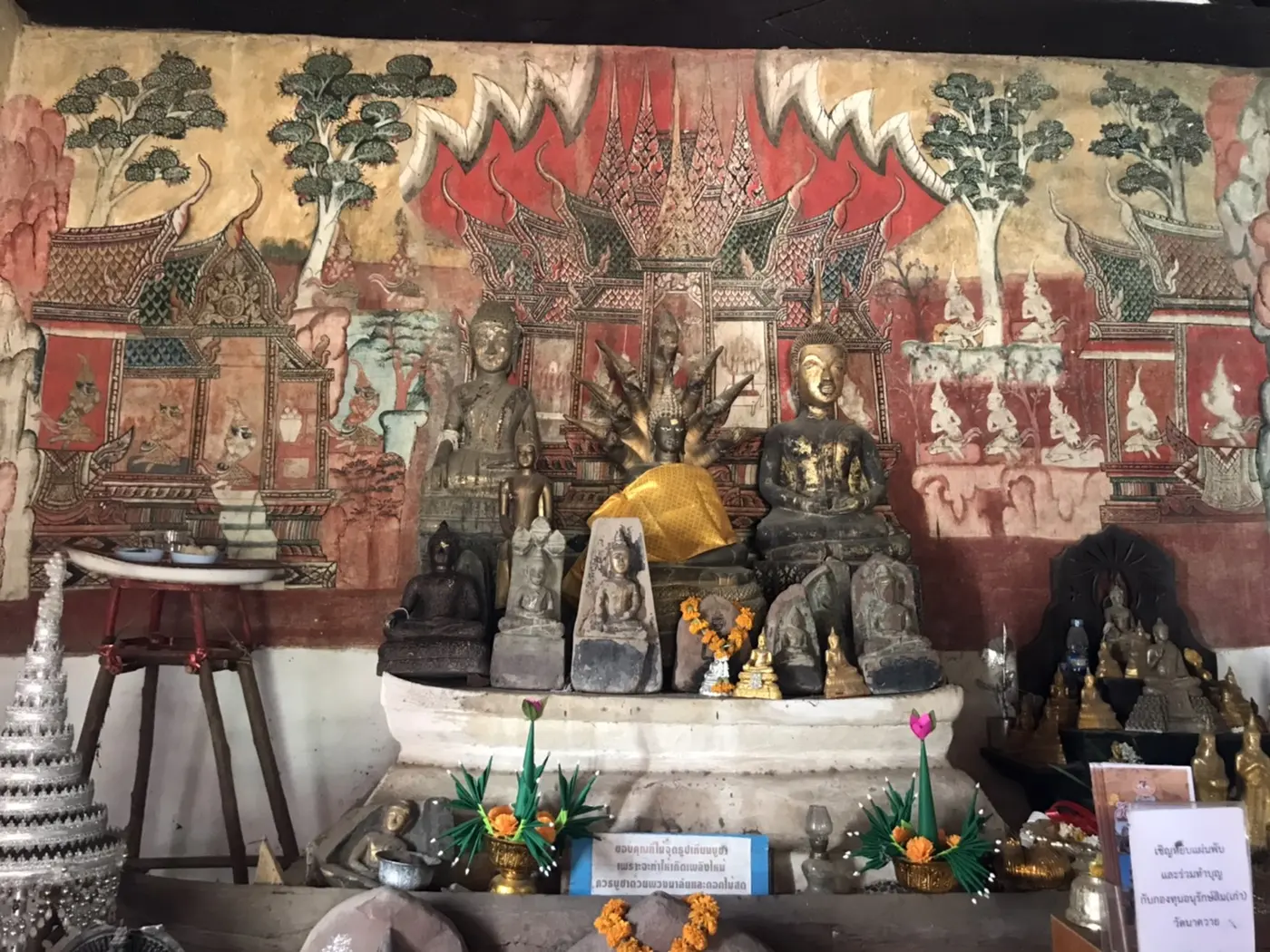
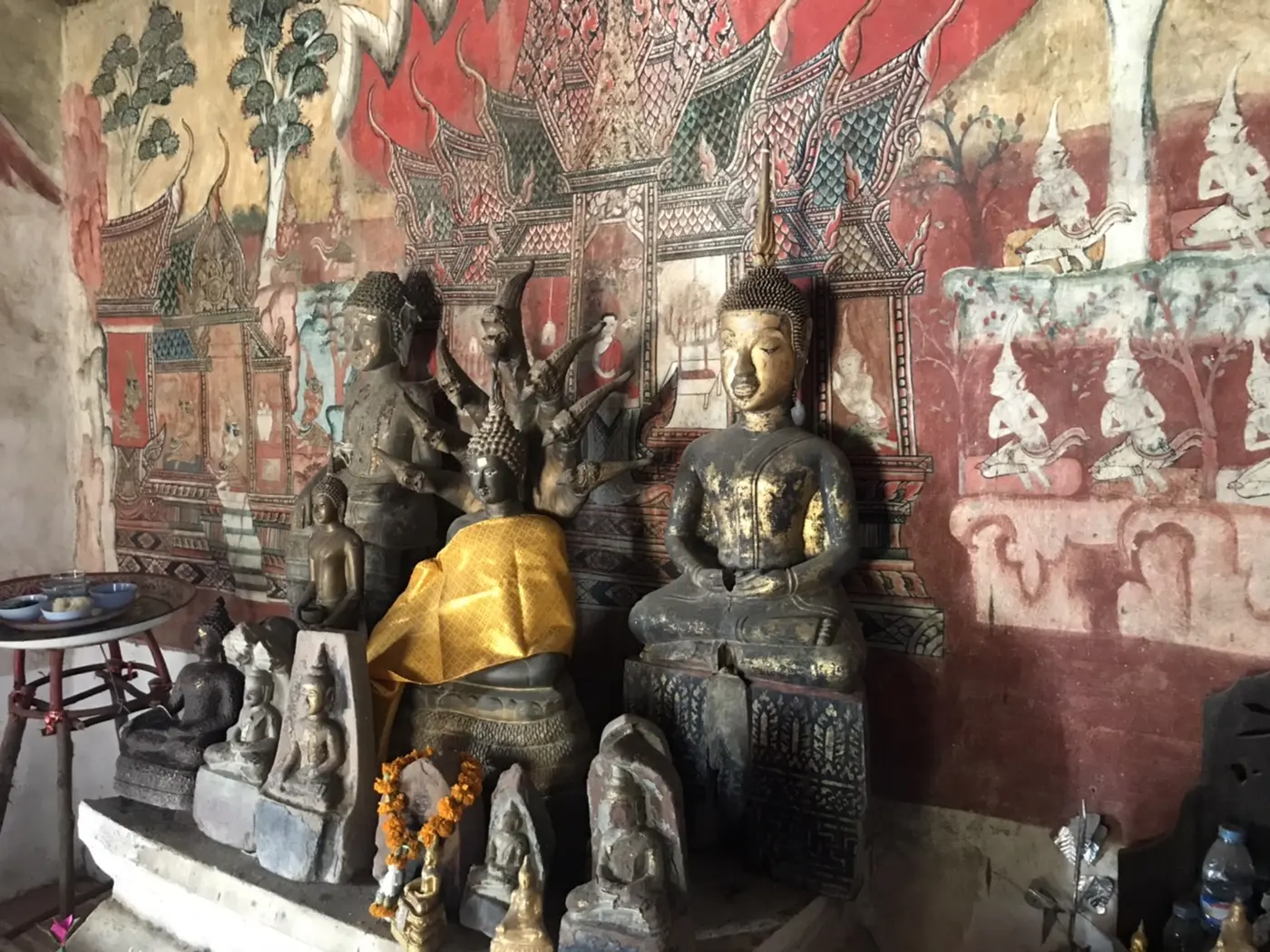
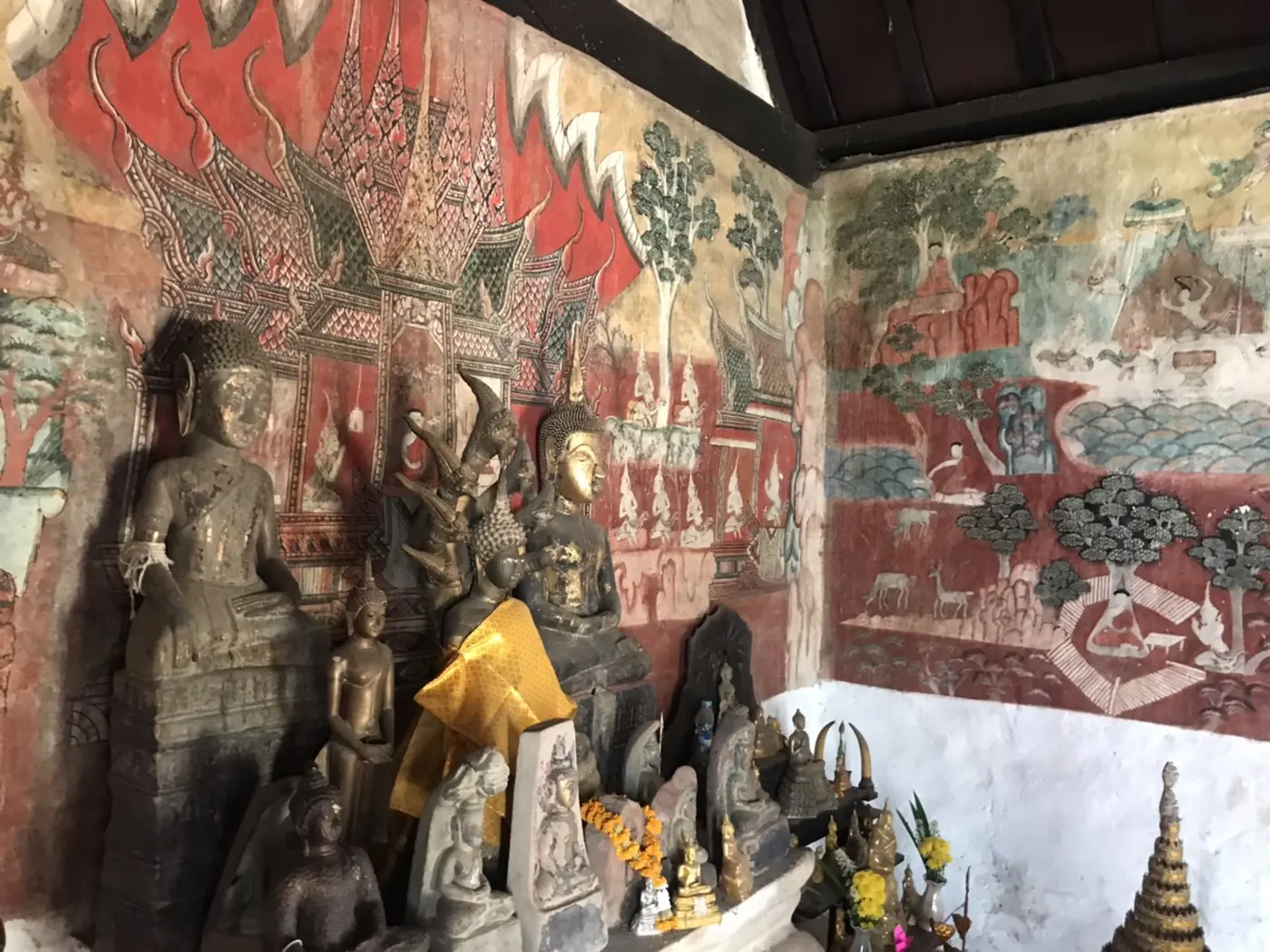
Inside the sim, the principal Buddha image is enshrined on a Chukchi altar base. The brick and plastered interior walls on all 4 sides feature murals depicting the life of the Buddha, while the front wall features similar murals. The construction is dated to the Rattanakosin period, influence
Isan folk art
Later, the Fine Arts Department designated it as an important national ancient monument on August 29, 1994, in the Royal Gazette, Volume 111, Special Issue 85, Page 52, designating an area of approximately 1 rai and 67 square wah, and it was restored in 2011.
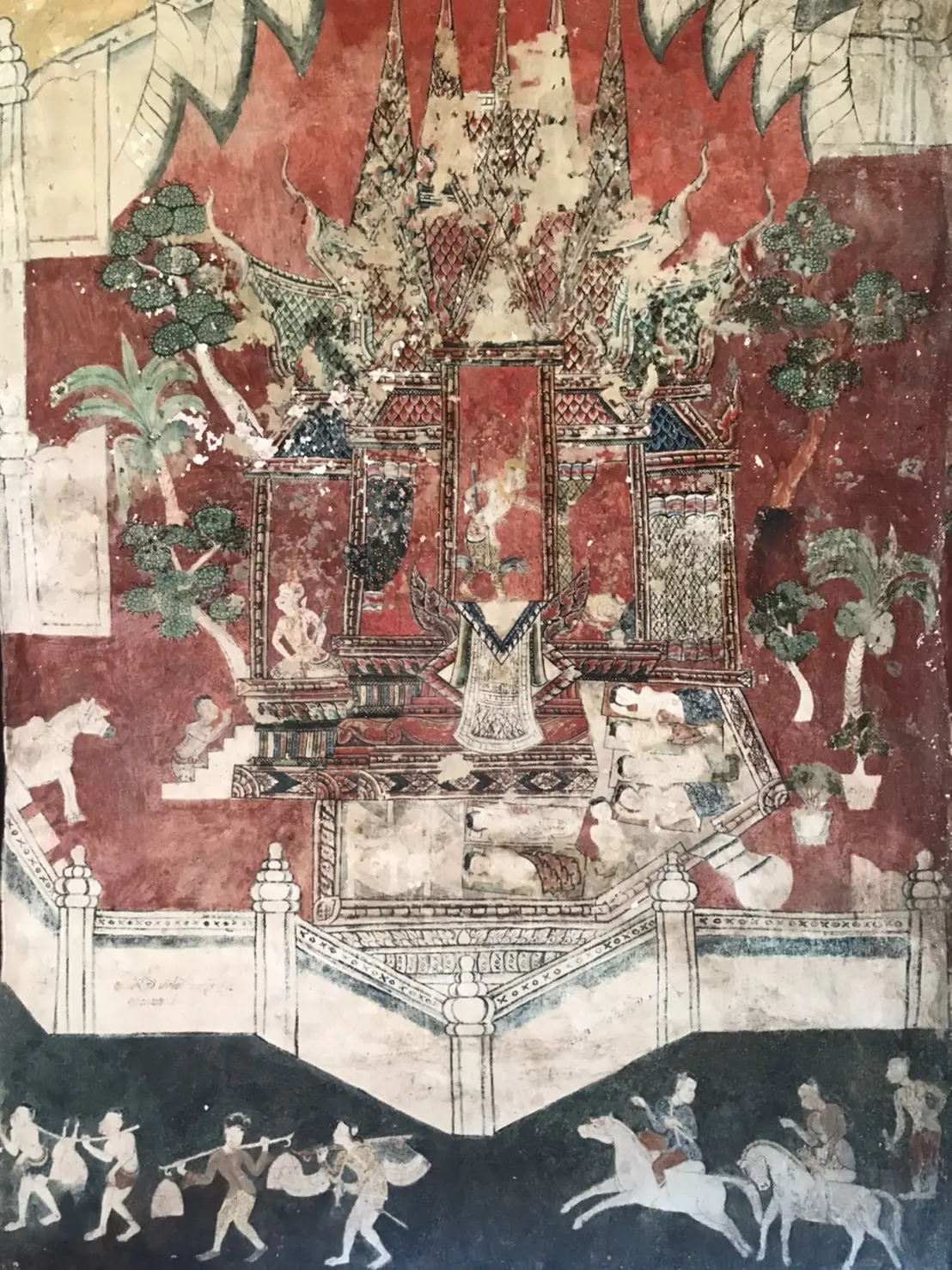
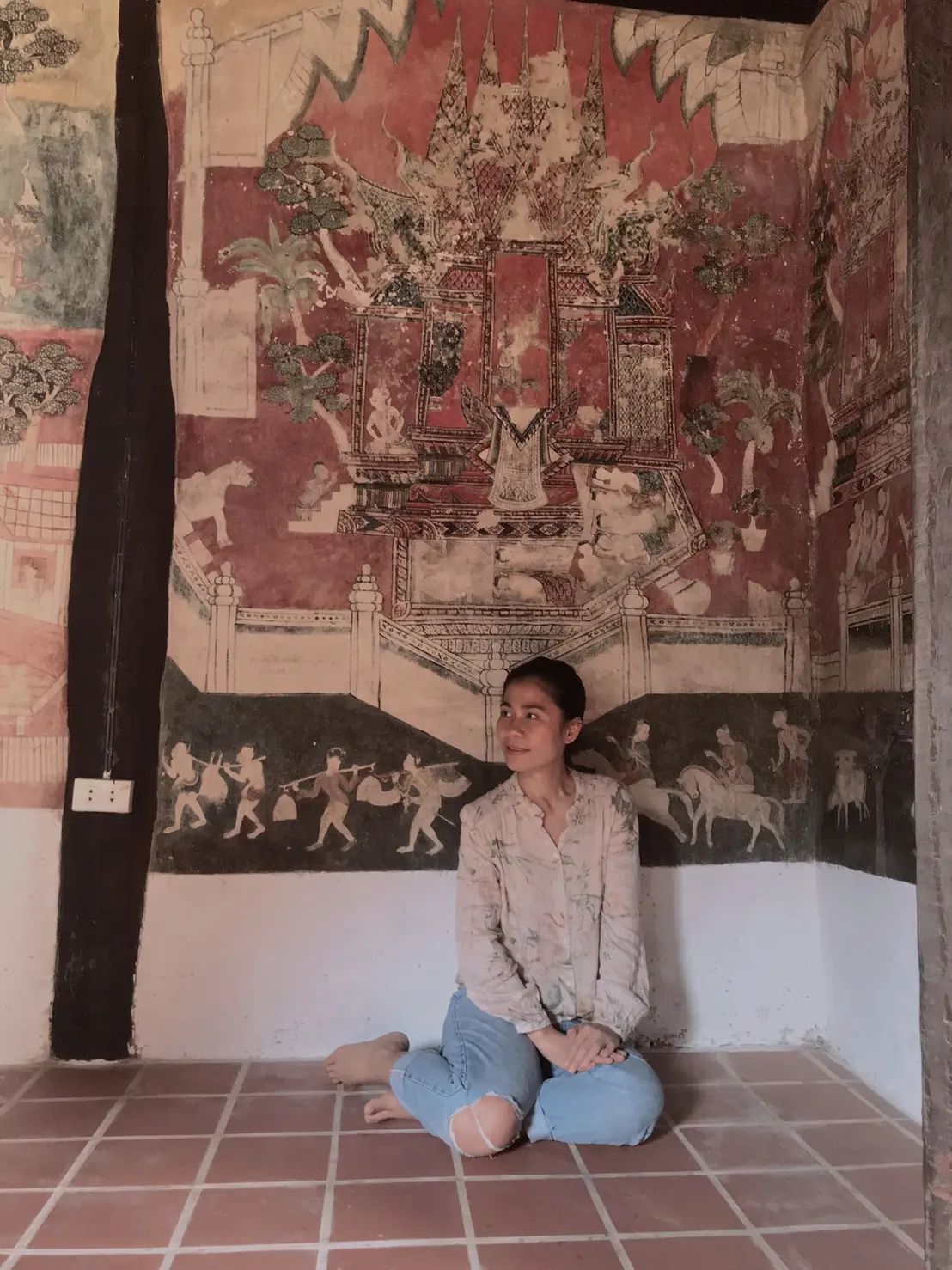
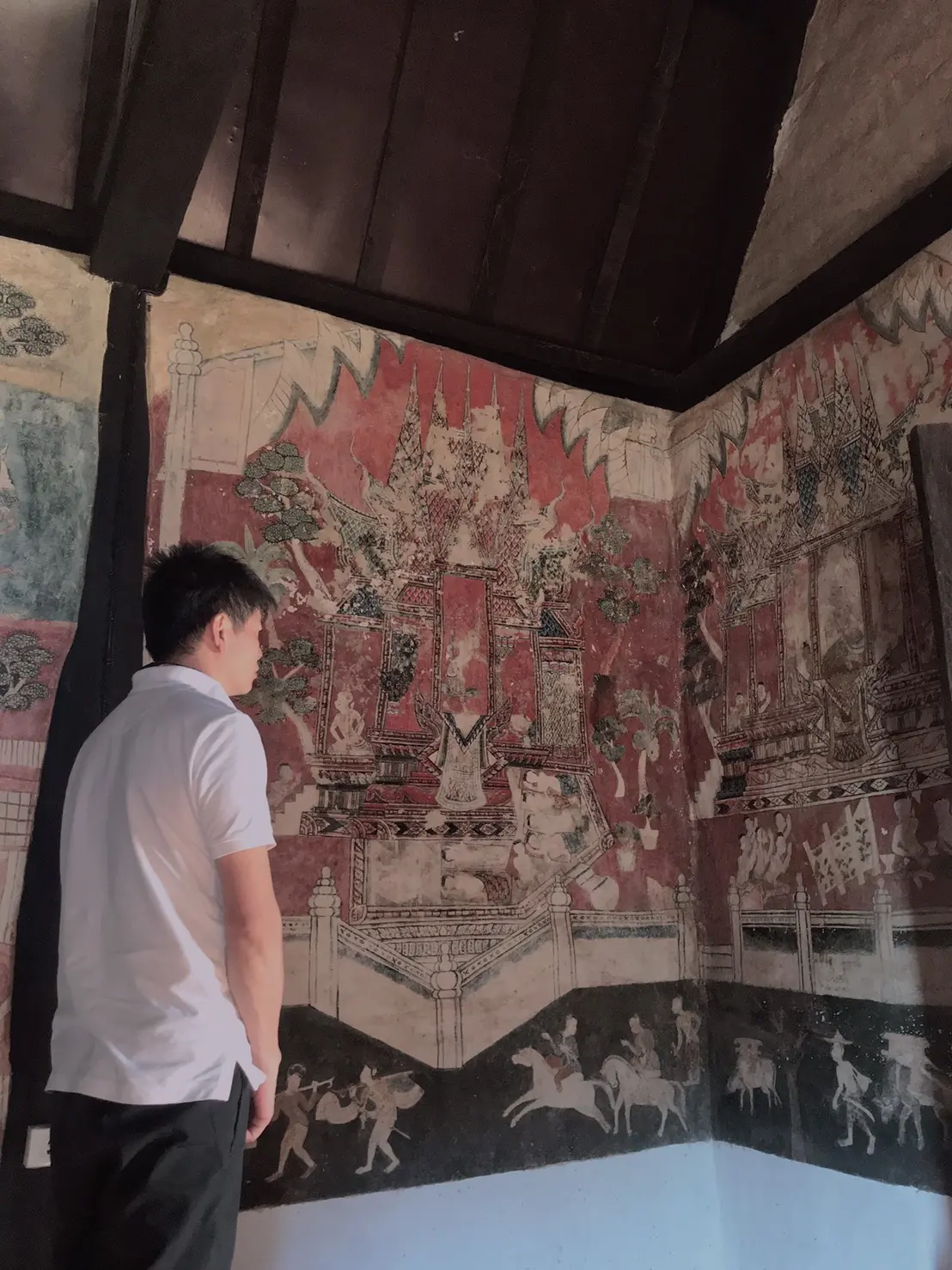
Later in 2010, another restoration was carried out. The interior walls feature valuable murals depicting the assembly of celestial beings (Thep Chumnum), the life of the Buddha—including the subduing of Mara and Parinirvana—and Jataka tales such as the Pachit Kumara Jataka and various chapters of the Vessantara Jataka (Maha Wetsandon Chadok). These murals reflect social conditions, ways of life, living standards, urban prosperity, occupations, games and entertainment, rituals, costumes, and hairstyles. Besides local Isan and Lao people, they also depict foreigners, including Chinese, Westerners, and South Asians, who played roles in the country during that period.
The New Ubosot
On January 10, 1994, Phra Khru Sophonkhanthayaphon, the abbot of Wat Na Khwai, held a meeting with villagers to discuss constructing a new ordination hall (ubosot), because the old hall had already been registered by the Fine Arts Department. The meeting unanimously agreed to proceed with construction. The construction chairman was Phra Khru Sophonkhanthayaphon, abbot of Wat Na Khwai. Construction funding was supported by Phra Ratchawitthayakhom (Luang Pho Khun Parisuttho) and local villagers. This ordination hall was completed on June 18, 2001, taking a total of 7 years.
------------------------------------------------
Wat Na Khwai, Nai Mueang Subdistrict, Mueang District, Ubon Ratchathani Province
Oral accounts recount that the Ban Na Khwai community was established after Phra Worarat Suriyawong (Thao Kham Phong) asked for royal permission to build the city of Ubon Ratchathani. The followers who accompanied him sought a suitable location to build a village, setting up a village shrine post by Nong Hang, revered by the villagers of Ban Na Khwai as "Chao Pu". Initially, the village had about ten households. When the village expanded and grew to have a considerable number of households, the villagers built a temple called "Wat Na Khwai", with "Luang Pu Daeng" as its first abbot. Key monastic buildings within Wat Na Khwai include:
The sermon hall (Sala Kan Parian), built in 2009 and completed in 2014. Enshrined inside the sermon hall is an important Buddha image of Wat Na Khwai, Phra Chao Saen Lan, which serves as the principal image inside the sermon hall. It was built in 2011 and completed in 2012. Sacred objects and important Buddha images of Wat Na Khwai are enshrined inside Phra Chao Saen Lan. In addition, Phra Chao Saen Lan is unique in that it is decorated with 1-baht coins minted during the reign of King Rama IX, King Bhumibol Adulyadej, totaling 111,999 THB (baht).
The old sim (ubosot) of Wat Nakhwai was built by Ya Khu Tha and the villagers of Na Khwai. The exact year of construction is unknown, but according to local lore, it was built by Ya Khu Tha, the 2nd abbot of Wat Nakhwai, who led the villagers to construct the sim (ubosot), measuring 11 cubits and 1 span. Later, the front of the sim at Wat Nakhwai was repaired and extended. When the Fine Arts Department undertook restoration work between 2011 and 2007, the extension was removed. Today, the sim (ubosot) of Wat Nakhwai is a rectangular masonry building with plaster, 5.5 meters wide and 9.00 meters long, with a base of about 50 centimeters. The upper structure is open, with a stairway and an entrance door into the sim (ubosot) on only one side. The main ceremonial hall of the sim has solid walls on all four sides, with 1 window opening each on the north and south sides. The door of the sim is on the east side. The roof of the sim is a gabled roof originally covered with wooden shingles, decorated with carved wooden chofa, bai raka, and hang hong. There are 5 carved wooden brackets adorning each side of the building along with corbel sockets. Inside the sim, the principal Buddha image is enshrined on a plastered brick pedestal (chukchi base).
Murals of the old sim (ubosot) at Wat Nakhwai, Nai Mueang Subdistrict, Mueang District, Ubon Ratchathani Province
There is no record of who painted the murals of the old sim (ubosot) at Wat Nakhwai or when they were painted. Murals appear on both the exterior and interior walls of the sim: the exterior wall features a painting above the entrance doorframe, while the interior features murals on all 4 walls.
The mural painted on the exterior wall above the doorframe is rendered on a white background with black outlines, filled or colored in soft yellow, green, and black. The painting style blends the Life of the Buddha with local ways of life. The main scene on the upper section of the wall depicts the Life of the Buddha during the Defeat of Mara: the painter depicted the Buddha seated in meditation, with Phra Mae Thorani wringing her hair bun so the water would wash away both the giants and demons who came to harass and disturb the Buddha before His enlightenment. Just below on the right are 3 women wearing chada crowns, and on the left is a hunched elderly woman, which likely signifies the daughters of Mara who transformed themselves to tempt the Buddha, but were ultimately defeated and turned into old women. Further down is a scene of everyday life showing Isan people playing the khene and dancing, as well as a piphat ensemble from central Thailand. In addition, there are standalone figures unrelated to any specific story, such as a person dressed like someone of Chinese descent.
As for the murals inside the sim, they feature colored backgrounds, with the primary background colors being red, yellow, and green. However, on the south wall and the northern section of the east wall, it is presumed that the paintings remain unfinished: the background is white, without background coloring, and compositional elements are missing. In the middle section of the wall is a depiction of Buddhist monks journeying through the forest to pay homage to the Buddha descending from the Tavatimsa Heaven, and the northern section of the east wall depicts the Life of the Buddha, which also retains a white background without background coloring.
The murals inside the sim depict stories of the Life of the Buddha, arranged chronologically starting from the east wall, moving to the north wall, and proceeding counterclockwise until concluding with the Parinirvana scene on the south wall.
In addition to the paintings, the inscriptions on the walls serve as interesting evidence that sheds light on the artists. Specifically, the captions and accompanying text on the exterior wall were written in the Tai Noi script; although faded, parts of them can still be deciphered. However, the writing found in the murals on the interior walls is mostly in the Thai script. Considering the scenes depicting both a central Thai piphat ensemble and an Isan khene ensemble, combined with the script found on the murals, it can be said that the artists of these murals likely included both artisans from Bangkok and local craftsmen.
Planning it yourself?
What independent travellers usually book before they go, from providers that actually work
Thai language, pay in baht
 Photo: Nopparat thanatawan · CC BY-SA 4.0 · Wikimedia Commons
Compare many rental companies on one page
Popular with Thai travellers, Thai-language pages
Museum and landmark tickets, ready on your phone
 Photo: Christophe95 · CC BY-SA 4.0 · Wikimedia Commons
Hotels near the station and old town, many with free cancellation
 Photo: Ddalbiez · CC BY 3.0 · Wikimedia Commons
City tours with transport and guide, book ahead
Partner links · we may earn a small commission when you book, your price stays the same
Let Rin design a trip for your group