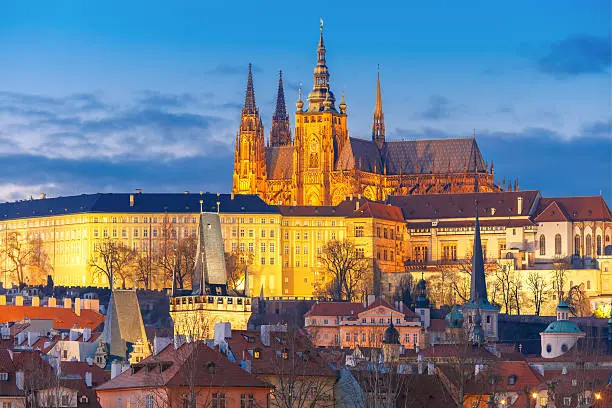
Prague Castle
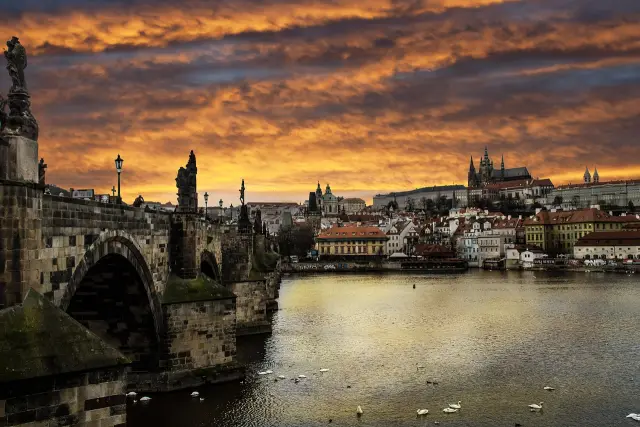
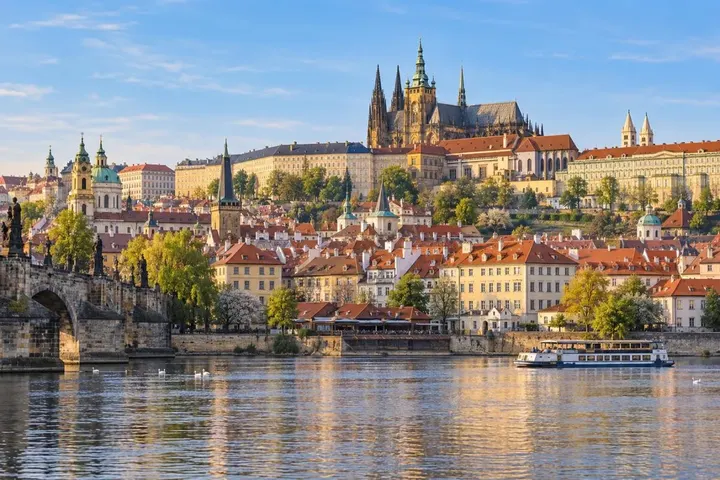
Prague Castle (click to book tickets) has stood magnificent and imposing alongside St. Vitus Cathedral for centuries. The castle itself was founded in the 9th century, more than a thousand years ago, by Prince Borivoj of the Premyslovci Dynasty. According to the Guinness World Records, it is the largest ancient castle complex in the world, covering an area of nearly 70,000 square meters (approx. 437.5 rai), and is also designated as a UNESCO World Heritage site.
The castle grounds comprise the palace itself, churches, and various cathedrals. Over the centuries, this beautiful castle underwent multiple modifications and repairs, starting from the 10th-century Romanesque style to the 14th-century blend with Gothic architecture. Later on, it underwent major renovations in 1918-1938 by the famous Slovenian architect Josip Plecnik, and since the Velvet Revolution, the castle has undergone continuous restoration up to the present day.
Beginning in the 10th century, Prague Castle served as the seat of Czech monarchs and the highest church authorities, while today it serves as the official office of the President.
The years 1346-1378 marked an exceptionally significant era when the castle was the residence of Holy Roman Emperor Charles IV, who played a pivotal role in ushering in one of Prague's golden ages. Subsequently, the son of Charles IV, King Wenceslas IV, further expanded the castle.
However, during the Hussite wars in 1419 - 1437, Prague Castle was abandoned and left unattended.
It was later restored under King Wladislaw Jagellon, who moved his residence back to Prague Castle and commissioned new additions, including some of Prague's earliest Renaissance-style structures, such as the magnificent Vladislav Hall (Wladislaw Hall).
Another era of major transformation for Prague Castle came under Holy Roman Emperor Rudolf II, who ascended the throne in 1575. He sought to attract artists and scholars to Prague, turning it into a true center of power and culture.
The history of Prague Castle shifted alongside the fortunes of its ruling monarchs until the fall of the Austro-Hungarian Empire. In 1918, Prague Castle became the presidential seat of Czechoslovakia, with Tomas Garrigue Masaryk serving as its first president.
Today, the castle is considered priceless, housing invaluable historical treasures such as the Czech Crown Jewels. Now that we know its history, let's explore the castle together!
Must-see highlights in Prague Castle
Chapel of the Holy Rood (Church of the Holy Rood)
Upon entering, you will find the fountain courtyard, home to the Church of the Holy Rood. Directly opposite is an art museum showcasing collections gathered since the era of Rudolf II. Continuing further inside brings you face-to-face with the magnificent St. Vitus Cathedral.
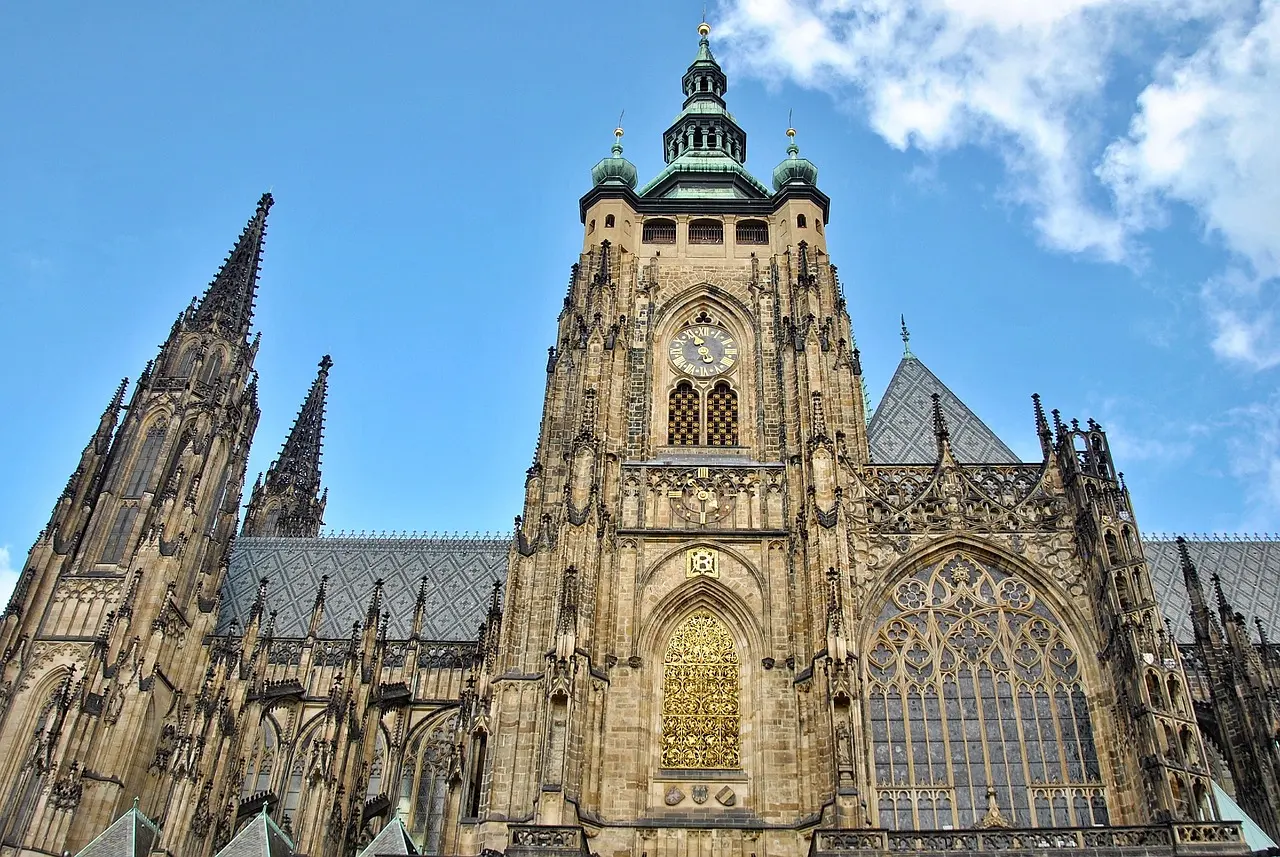
St. Vitus Cathedral
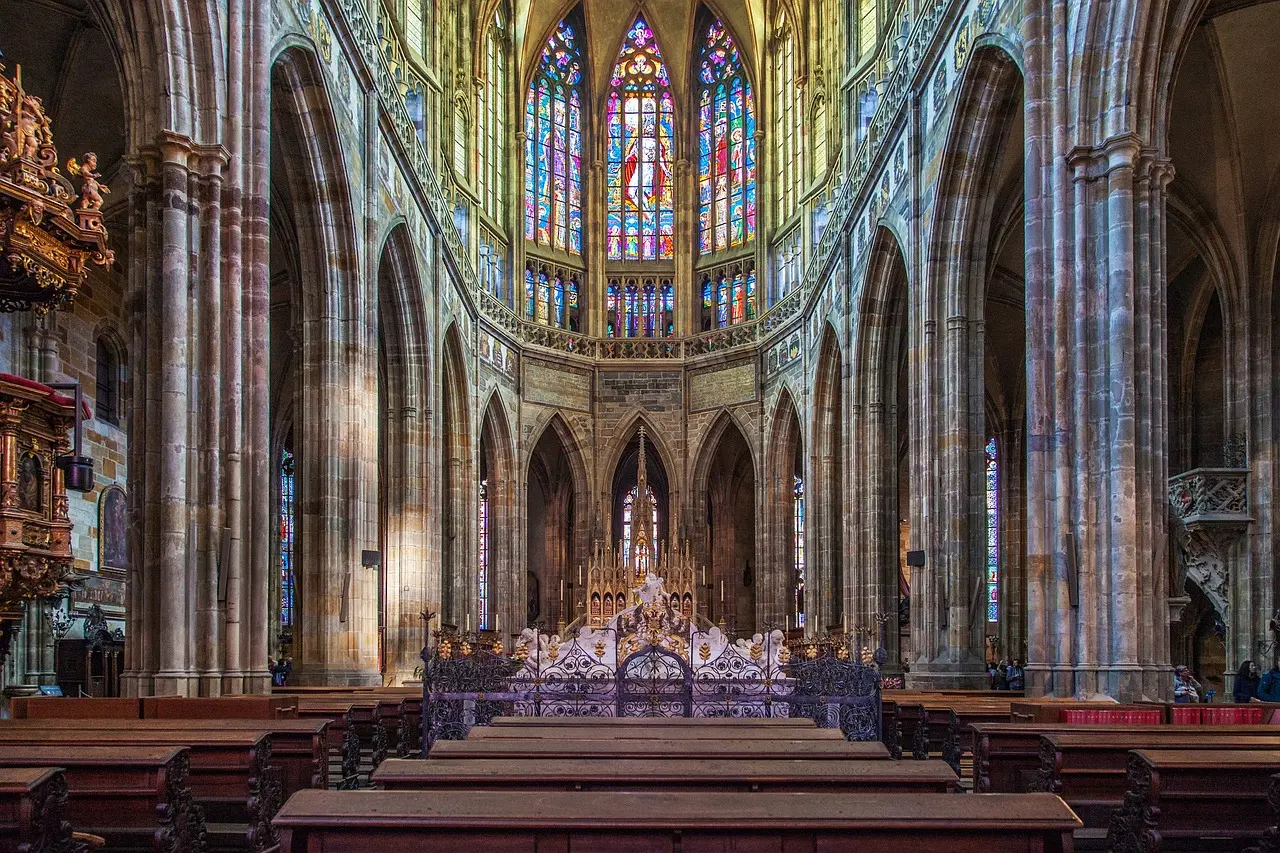
This cathedral was founded in 1344 by order of John of Luxembourg, featuring a blend of Neo-Gothic and Renaissance architecture. Its first master builder and designer was Matthew of Arras; following his death, the work was continued by the Swabian architect Peter Parler until the Hussite wars erupted. Construction spanned many centuries before finally reaching completion in the 19-20th centuries. The cathedral also preserves the Czech Crown Jewels and houses the tomb of King Wenceslas (the Good King).
St. George's Basilica
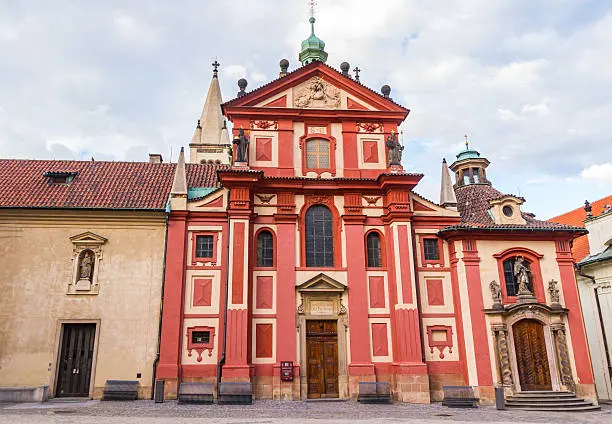
This striking red church sits just behind St. Vitus Cathedral. Commissioned by Prince Vratislav, it is among Prague's best-preserved Romanesque monuments. The interior is adorned with Bohemian-era frescoes and serves as the burial site of members of the royal dynasty.
Old Royal Palace
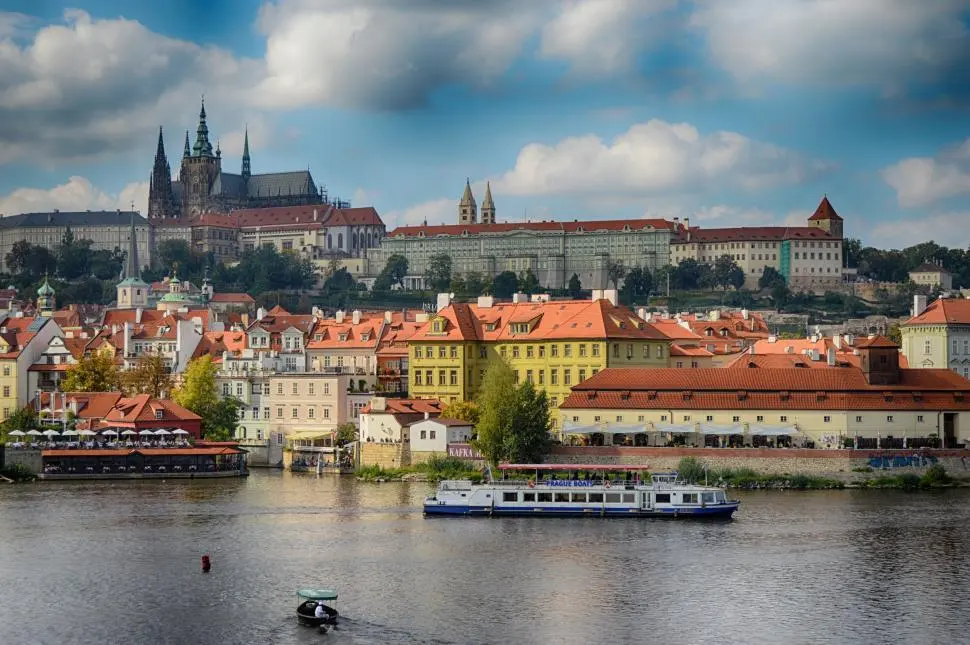
The Old Royal Palace is situated to the right of St. Vitus Cathedral. Built in the 11th century as the residence of Bohemian dukes and princes, it comprises three main levels. The lowest level is a Romanesque palace constructed under Sobeslav in 1135.
Later, Premysl Otakar 2 and Charles 4 added their own royal quarters on the second level, while the third level was commissioned by Vladislav Jagiello as a grand Gothic hall bearing his name (Gothic Vladislav Hall). This hall historically served as the state chancellery and the meeting chamber of the Bohemian Diet.
Golden Lane (Golden Land)
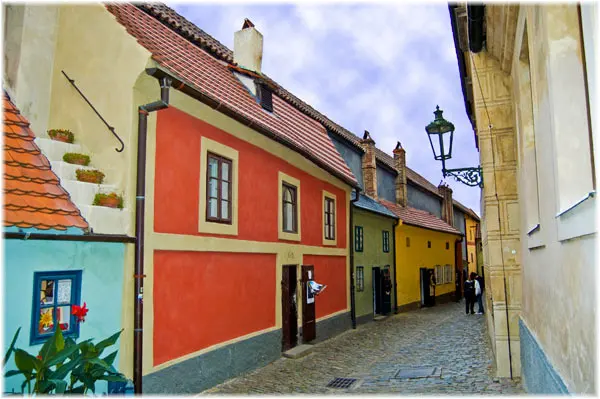
You must enter via the street beside St George’s Basilica. Walk straight and then turn left to find Golden Lane, the smallest street in Prague lined with tiny houses along the way.
The street was constructed in the late 15th century and the houses were built in the late 16th century. It was named Golden Lane due to legends that alchemists lived here, who could turn anything into gold and possessed the philosopher's stone and the elixir of eternal youth.
This place began when Rudolf II granted small plots of land to castle marksmen guarding the fortification. However, with 24 marksmen, there was only enough space to build very small houses. They used stone, mud, and wood for construction, and in those days there was a rule that houses could not be sold or rented out.
The famous house that visitors flock to see is No. 22, the blue house shown in the picture, which was once home to the renowned writer Franz Kafka.
Admission Fees
Walking around the exterior grounds is completely free of charge. For those wishing to visit the interiors, admission tickets are required. The tickets are valid for several days and do not expire on the day of purchase, so there is no need to rush. Ticket prices and categories are as follows:
Circuit A: 350 CKZ per person
Includes admission to St. Vitus Cathedral, Old Royal Palace, the permanent exhibition “The Story of Prague Castle”, St. George’s Basilica, Golden Lane with Daliborka Tower, and Rosenberg Palace.
Circuit B: 250 CKZ per person
Includes admission to St. Vitus Cathedral, Old Royal Palace, St. George’s Basilica, and Golden Lane with Daliborka Tower.
Circuit C (Circuit A): 350 CKZ per person
Includes admission to The Treasure of St. Vitus Cathedral exhibition and Prague Castle Picture Gallery.
Concessions are available for children, students, and families. For more ticket information, visit:
https://www.hrad.cz/en/prague-castle-for-visitors/tickets
Best Time to Visit Prague Castle
The castle grounds are open outside from 6.00 to 22.00, but historical monuments open and close at different times. Regular opening hours for visitor sites are from 9.00 to closing time at 16.00 - 17.00.
The best arrival time is 8.40, or about 15 to 20 minutes before opening. At that time, you do not have to wake up too early and the crowds have not arrived yet, allowing you to fully experience the peace, beauty, and grandeur of the castle. Soon after, everything opens for you to be among the first visitors to soak in the atmosphere. Most importantly, try to avoid visiting on weekends.
How to Get to Prague Castle
Two convenient options to reach Prague Castle are walking and using public transportation, allowing you to take in the fairytale-like atmosphere along the way.
Walking to Prague Castle: From Malostranske metro station, you can walk up the Old Castle Stairs to the eastern gate of the castle, enjoying breathtaking views of Prague that make you forget the climb.
Public Transportation: This route is less tiring and offers lovely views. Take Tram 22 from Narodni trida, but do not get off at Prazsky hrad station; stay on and get off at Pohorelec station. Walking downhill towards the main castle gate, you will pass charming streets, historic monuments, and the Church of the Nativity.
On the way back, do not forget to walk down from the front to see colorful rows of houses, museums, shops, and official buildings stretching down like a scene from an imagination.
These are all the key highlights of Prague Castle. You can spend an entire day exploring the site and discovering exciting historical stories. You are sure to be impressed by Prague's grandest and most beautiful castle.
Pimwadee Prasarn, European Studies Department (Prince of Songkla University)
Source: www.seeyouagaintour.com
Planning it yourself?
What independent travellers usually book before they go, from providers that actually work
Thai language, pay in baht
 Photo: Zrzek007 · CC BY-SA 4.0 · Wikimedia Commons
Compare many rental companies on one page
Popular with Thai travellers, Thai-language pages
Hotels near the station and old town, many with free cancellation
City tours with transport and guide, book ahead

One way from about 7,084 baht (Dec 2026)
Partner links · we may earn a small commission when you book, your price stays the same
Let Rin design a trip for your group