Road Trip Across Czechia
This scenic 7-day road trip takes you through the most charming destinations in Czechia, starting from Cesky Krumlov and ending in Prague. Experience a wonderful mix of history, culture, and nature. You will fall in love with this country on a relaxed, unhurried journey designed for unwinding and soaking up every moment.
1 - 2 Cesky Krumlov
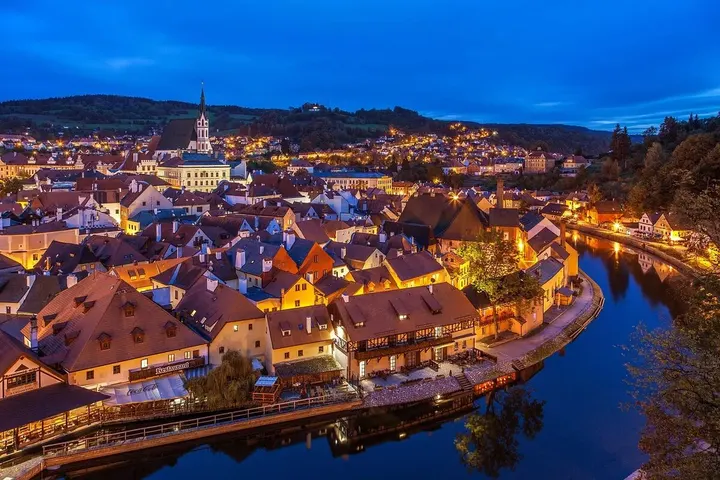
Our first stop is the fairytale town of Cesky Krumlov, designated a UNESCO World Heritage Site in 1992. With over a thousand years of rich history, you can stroll through its quaint, romantic streets and never tire of its charm.
It is believed that the earliest nobles to settle at Cesky Krumlov Castle in 995 AD belonged to the Witigonen family. Legend tells that close relatives granted this land to them, namely the Premyslid dynasty (Premyslovci), renowned rulers of Bohemia, Poland, and Hungary during that era.
The town changed hands among several rulers throughout history. Following the end of World War II in 1945, the town and castle passed to the Schwarzenberg family, having been under German control until the collapse of the Nazi Party, after which Cesky Krumlov returned to Czech administration once again.
Things to Do in Cesky Krumlov
Cesky Krumlov Old Town
When you arrive by car in the Old Town, parking is located near the castle on the northwest side, where you will see the stone gateway leading up to the castle grounds.
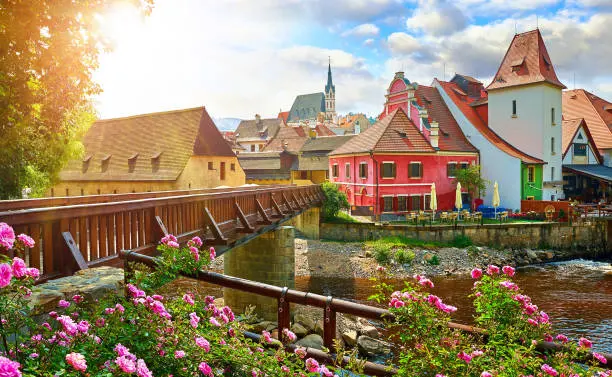
The cobblestone streets meander along the bends of the Vltava River. Looking up toward the sky, you will see picturesque steep roofs aligned in classic harmony.
If you wish to purchase museum tickets in the Old Town, you can stop by the local Tourist Information Center right in the main square.
Check details and ticket rates at http://www.ckrumlov.info/docs/en/atr422.xml
Cesky Krumlov Castle
When arriving at the castle, the first thing we did was look through the opening in the wall (bird’s-eye view) to take in the stunning panoramic view of the town.
This castle was originally built in the 14th century as a residence for the Rosenberg dynasty and later the Schwarzenberg family, until after World War II when it became national property.
Once you purchase an admission ticket, you can visit the museum and climb the tower for a magical, panoramic view of Cesky Krumlov.
Afterwards, we walked west to explore the gardens and the pond.
Minorite Monastery
After visiting the castle, we walked back and stopped at the Minorite Monastery.
Commissioned by the Rosenberg family, your admission ticket grants access to two exhibitions here, which showcase the daily lives of monks during that period, including the story of Saint Francis of Assisi before he was canonized.
Shops along Latran
Leaving the monastery, we stopped around the Latran area, a vibrant souvenir shopping district. A notable stop is Cesky Pernik, a shop selling local treats like gingerbread, chocolates, alcohol, and regional handmade crafts.
Best Places to Stay in Cesky Krumlov
Hotel Bellevue
We rank this hotel as top choice because it is affordable yet high quality. Located near the castle, it offers lovely views of the town amidst a romantic atmosphere. The hotel also provides amenities such as a spa, sauna, and massage services.
Rates start from CZK 1,600.
Other hotels:
Hotel Ruze: CZK 3,000
Hotel Arcadie: CZK 2,600
Hotel Mlyn: CZK 1,300
2 Hluboka Castle
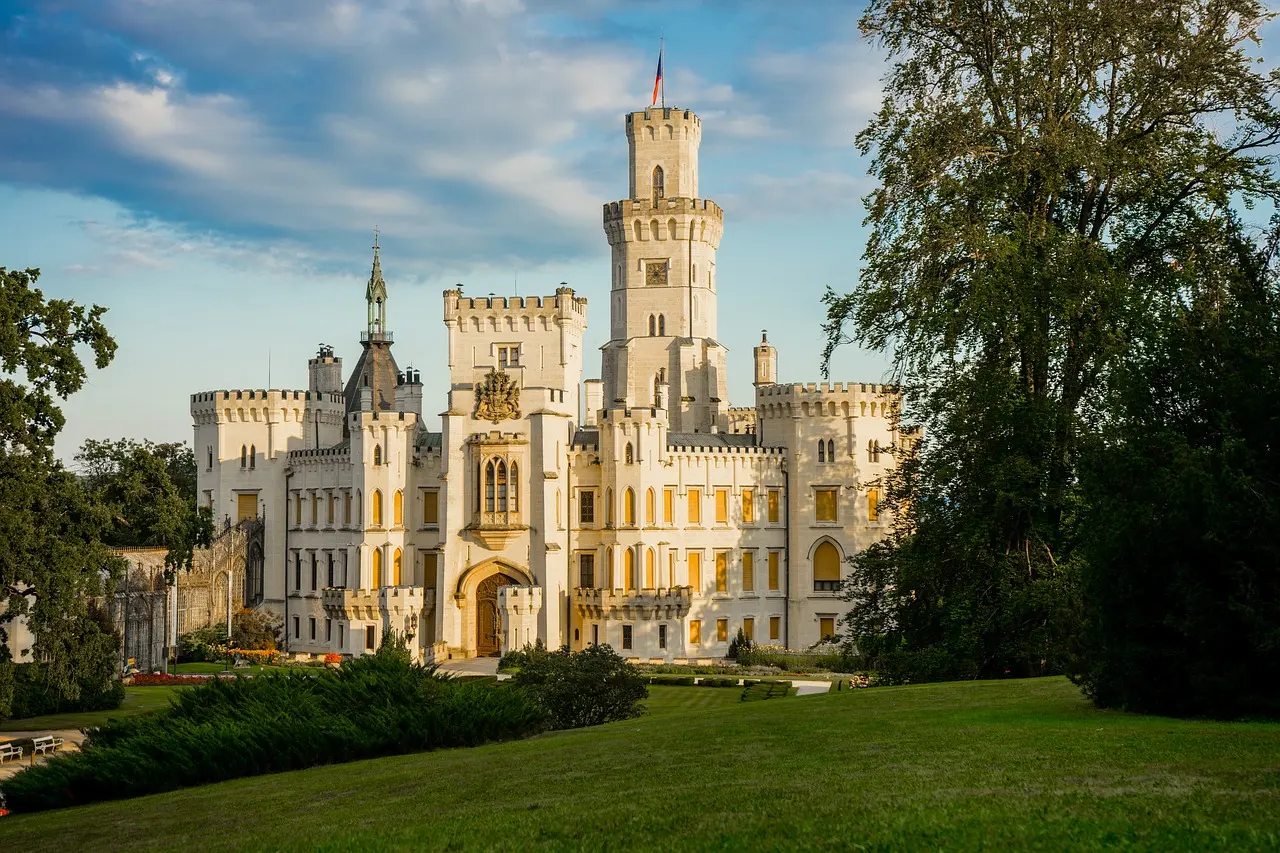
After staying overnight in Cesky Krumlov, we drove out in the morning towards Hluboka Castle, one of the most beautiful castles in the Czech Republic. Locals often call it the Czech Neuschwanstein Castle. Built in the 13th century, it changed hands across ruling dynasties over time, much like Cesky Krumlov Castle. Opening hours vary for each section.
Check opening hours here
Check ticket prices here
2 - 4 Karlovy Vary
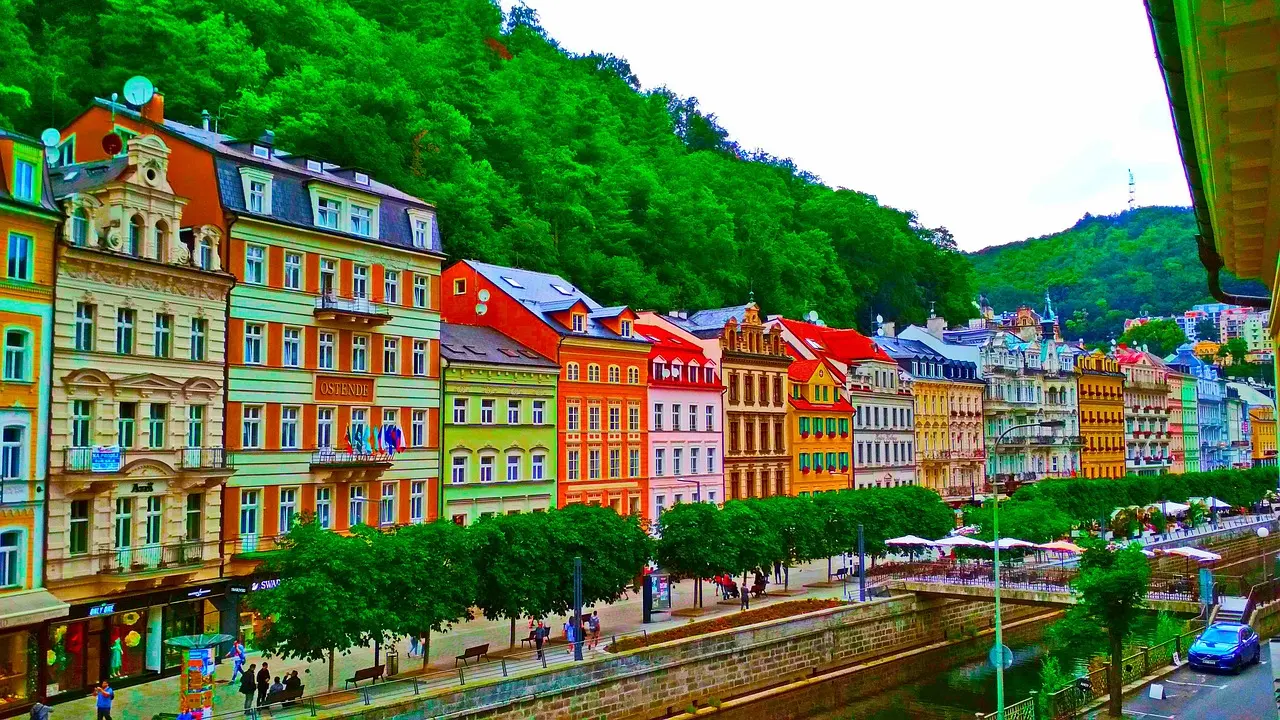
We continued our drive to Karlovy Vary, a charming and scenic spa town in the Czech Republic lined with lovely candy-colored houses. The town was founded in the late 14th century by order of King Charles IV. Legend has it that the hot springs here hold miraculous healing powers. Renowned historical figures have visited to soak in the thermal waters, including Beethoven, Tolstoy, and Mozart. We chose to spend three full nights here to unwind, relax, and enjoy the spa.
What to do in Karlovy Vary
Visiting this town means strolling around to sample thermal spring waters while admiring lavish Art Nouveau and grand Baroque architecture. Following World War II, Soviet influence also added a touch of Communist style to the mix.
The Spa Hotel Thermal
Before reaching the spa zone along the Tepla River, you will spot this hotel, whose structure was influenced by Socialist Brutalist architecture. Every July, it hosts the prestigious International Film Festival.
The Park Colonnade
Built in the 19th century, the Park Colonnade features elegant Viennese-style decorations. Here you will find mineral spring water sourced from the Snake Spring, flowing out of a serpent-shaped tap at a temperature of 30 degrees Celsius. Locals share that the snake spout was designed because grass snakes used to be abundant here in the past.
The Mill Colonnade
This imposing structure radiates true grandeur, supported by robust Corinthian columns lined along the entire promenade, elevating the thermal water-tasting experience to another level. Housing 5 separate mineral springs, it was constructed in 1880. Though it saw modest visitor numbers when it first opened, it has now become an essential must-visit landmark when arriving in Karlovy Vary.
The Market Colonnade
This historic spring source has been used since the 14th century and is known as the Charles IV Spring, as King Charles IV used it to treat his leg ailments. Back then, it was simply an open thermal spring nestled in the woods without any structure built over it.
Afterwards, walk over to the museum dedicated to the origins of Becherovka, a traditional herbal liqueur crafted from regional herbs that aids digestion and supports bodily wellness.
The Hot Spring Colonnade
Upon arriving at the Hot Spring Colonnade, look around and you will notice distinct Communist-era architecture.
The hot spring here surges intermittently from underground (Hot Spring Geyser). Be mindful, as it can shoot water up to 12 meters high at a steaming 72 degrees Celsius, making it the hottest spring in town.
The Grandhotel Pupp
Built in 1700, this five-star hotel stands as the premier historic luxury hotel of Karlovy Vary. You may recognize it as the filming location for the casino scene in James Bond.
Diana Tower Lookout
This hillside viewpoint is situated right next to The Grandhotel Pupp. You can take the funicular up toward the observation tower and the Slavkov forest (round-trip tickets cost 80 CZK), or take a scenic walk of around 150 steps. From there, take the elevator up the tower to enjoy scenic panoramic views of the town.
Recommended Spa Locations
The Castle Spa
Featuring thermal pools with a modern flair compared to other traditional spas, the experience here is contemporary and international, with prices slightly higher than elsewhere. The sign in front of the spa is marked as Zamecke Lazne rather than The Castle Spa.
You can check details and prices on the website:
http://www.zamecke-lazne.com/en/
(Monday to Friday open 7.30 - 19.30, and Saturday to Sunday 8.30 - 19.30)
The Windsor Hotel
Another wonderful spot to soak in soothing, warm thermal baths, centrally located right in the Spa Zone. Spa treatments are reasonably priced, and the thermal bath facilities are clean, though not very large.
You can check details and prices on the website:
https://windsor-carlsbad.cz/en/hotel-service/medical-and-wellness-treatments
Spa Hotel Thermal
We already highlighted this hotel earlier as a must-visit spot, but there is even more to enjoy: swimming in the hotel's outdoor heated thermal pool, offering spectacular scenic views overlooking the Spa Zone of Karlovy Vary.
You can check details and prices on the website:
https://www.thermal.cz/
Alzbetiny Lazne
The ultimate destination for dedicated wellness treatments is Alzbetiny Lazne. As one of the oldest spa establishments in town, with its building constructed in the 20th century, it is renowned for therapeutic wellness treatments. Situated right at the entrance of the town's Spa Zone, the building boasts classic Neo-Baroque architecture. Therapeutic treatments include mineral baths, curative massages, and warm mineral vapor inhalation for respiratory care.
You can check details and prices on the website: http://www.spa5.cz/en/treatments.html
(Open 9.00 - 21.00, but closes early on Sundays at 18.00)
Recommended Hotels
Our top hotel recommendations for this town were mentioned earlier: The Spa Hotel Thermal, The Grandhotel Pupp, and The Windsor Hotel. These luxury five-star properties boast rich histories interwoven with Karlovy Vary, feature on-site spa facilities, and consistently delight guests.
Explore more options at: https://www.luxuryhotelsguides.com
5 Bohemian Paradise
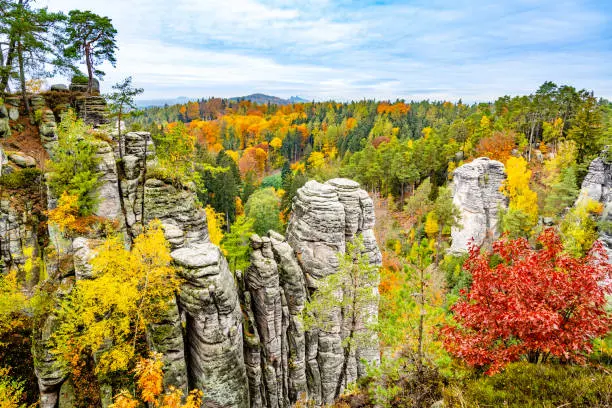
We made a quick stop here without staying overnight, as exploring the area takes only a few hours. In the town of Jicin, the area known as the Prachov Rocks became the first nature reserve in Czechia in 1955. As you walk inside, you will see towering sandstone rock formations rising high in front of you, making you marvel at nature's extraordinary ability to shape such wonders. During snowy winter days, there is almost no one here, and the restrooms and ticket booths are all closed. We recommend bringing a bottle of warm water with you. The wonderful part is that you get to spend quiet, private moments immersed in nature. From here, we head off to Prague.
5 - 7 Prague
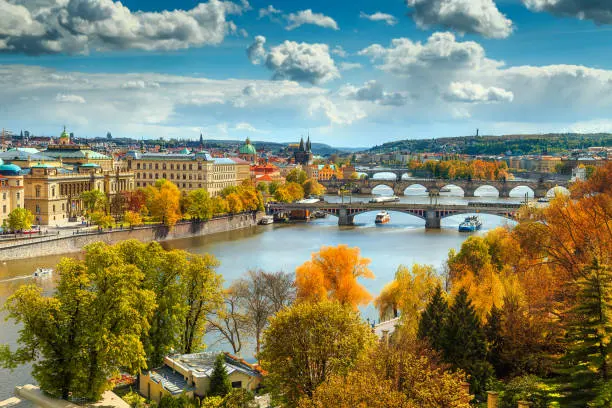
Prague is a magnificent capital city brimming with distinctive Czech charm. We chose to visit its major landmarks, starting early each morning to beat the crowds in popular spots. Our exploration covered both banks of the Vltava River: Old Town and Lesser Town. Starting our journey on Day 6, our first stop was Charles Bridge.
Charles Bridge
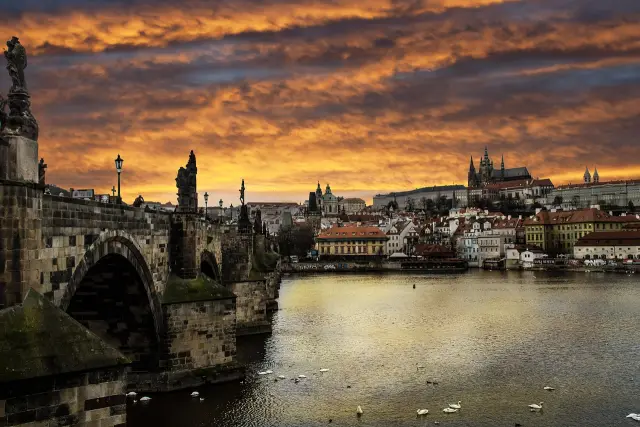
This Gothic stone bridge connects Old Town with Lesser Town. Commissioned by King Charles IV (Charles 4) in 1357, it was designed by architect Petr Parler, the same mastermind behind St. Vitus Cathedral. It gets busy throughout the day, so visiting in the early morning is highly recommended. Also, be mindful of your wallet and belongings, as pickpockets often blend into the crowds.
St. Nicholas Church
This Baroque church is located on the Lesser Town side. Built between 1704 and 1755 by the father-and-son architects Christoph Dientzenhofer and Kilian Ignaz Dientzenhofer, both sadly passed away before seeing it completed. It was eventually finished by Kilian's son-in-law, Anselmo Lurago. Dedicated to St. Nicholas, it stands as the largest church built by the Roman Catholic Church in Prague.
Prague Castle
Dating back to the 9th century, nearly 1,200 years ago, Prague Castle was founded by Prince Borivoj of the Premyslovci Dynasty. According to Guinness World Records, it is the largest ancient castle complex in the world, covering an area of 437.5 rai. It is a UNESCO World Heritage site and once served as the seat of various kings; following the fall of the Austro-Hungarian Empire, it became the presidential office.
St Vitus’s Cathedral
This Neo-Gothic and Renaissance cathedral was commissioned in 1344 by John of Luxembourg. Its first master architect was Matthew of Arras, and after his death, work was taken over by Swabian architect Peter Parler—the very same architect who designed Charles Bridge. Construction continued until the Hussite Wars, though he passed away before seeing its completion. The cathedral's construction spanned centuries, finally reaching completion in the 19-20th centuries. It serves as the resting place of King Wenceslas and houses the Czech Crown Jewels.
Old Royal Palace
The Old Royal Palace sits right next to St Vitus’s Cathedral. Built in the 11th century as the residence of the Bohemian princes, it features three levels. The ground level is a Romanesque palace built by Sobeslav in 1135. Later, Premysl Otakar II and Charles IV added the second level, while the third level was constructed by Vladislav Jagiello. This upper level houses the massive Gothic Vladislav Hall named in his honor, which once served as the hall of government and the old Bohemian parliament.
Golden Lane
Located on the northern side of the castle grounds, this little lane was originally granted by King Rudolf II to 24 marksmen, who built tiny houses close together. It earned the name Golden Lane from the legend that alchemists seeking to produce gold once resided here.
Check ticket details at https://www.hrad.cz/en/prague-castle-for-visitors/tickets
7 Exploring the Old Town
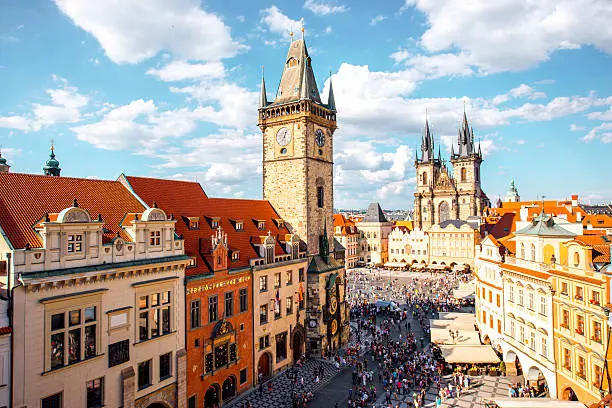
Old Town Square
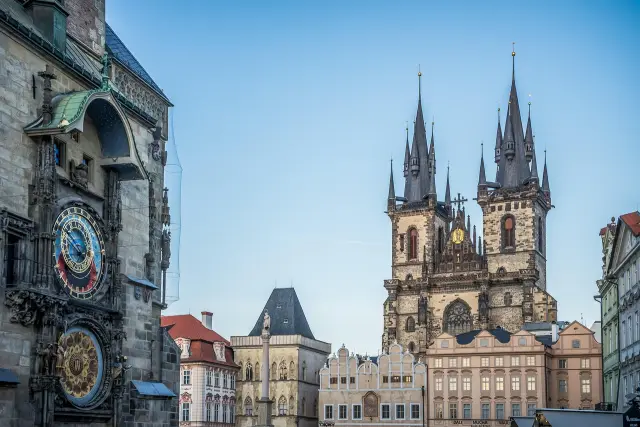
This vibrant square draws countless visitors thanks to its beautifully preserved historic buildings and monuments, including historic churches, the Old Town Hall, and another St. Nicholas Church in Prague. Another standout landmark is the Old Town Hall, dating back to 1338, which was later enhanced with the Astronomical Clock in 1410.
Old Town Hall Tower and Astronomical Clock
Built in 1338, this site served as the city's administrative center in the past. Once the tallest structure in the city, this Gothic tower features the renowned Astronomical Clock (Orloj). Every hour between 9.00 to 23.00, figures of the Twelve Apostles appear in a procession to the sound of chiming bells. You can climb to the top for a stunning 360-degree panoramic view; expect it to be bustling with visitors all day long.
Check ticket details at https://www.prague.eu/en/object/places/3126/old-town-hall-tower
The Church of our Lady before Tyn
This Gothic church was constructed in the mid-14th century and served as the principal church during the Hussite Wars. Inside, the altar in particular is among the most masterfully crafted works of art. From outside, you will notice that the two towers differ slightly in size, representing female and male.
Kinsky Palace
This is one of the most charming Rococo palaces, built between 1755 and 1765 for Jan Arnost Goltz, who requested two separate entrances beneath the balcony. Following his passing, the palace came into the possession of the Kinsky family. In the photo below, it stands to the right of the Jan Hus Memorial.
These are just some of the must-see highlights when visiting Prague. Beyond these, there are countless other fascinating places waiting to be discovered once you arrive. Taking a road trip here made for an unforgettable, deeply cherished journey.
Souvenirs from Czechia
Souvenir shops can be found throughout tourist areas. Popular souvenirs include:
- Thermal spring drinking cups with gold trim and picturesque motifs of Karlovy Vary
- Spa wafers, thin and crisp round wafers with various fillings, especially chocolate
- Bohemian crystal from Karlovy Vary style glassworks; a top recommendation is the Moser Glass Factory, founded by Ludwig Moser in 1800, which once crafted glassware for the Austro-Hungarian royal court
- Becherovka herbal liqueur, originating right in this town and celebrated at the Jan Becher Museum, available to buy in Karlovy Vary
Things to Know About Driving in Czechia
Thai driving licenses can be used in Czechia since they include English text. The roads are well-maintained and comfortable to navigate, drivers are largely law-abiding, and traffic jams are rarely an issue thanks to an excellent public transit system.
Car Rental
Renting a car in the Czech Republic is quite straightforward. You only need to present a driver's license that has been held for more than 1 year, and you must be at least 21 years old. Then, choose your vehicle and pay the rental fee and insurance. Rental rates start at around CZK 500 per day, with major rental companies including Avis, Budget, and Europcar.
Road Traffic Rules
Driving rules in the Czech Republic follow the same standards as other European Union countries. Speed limits vary depending on the area, district, or road section. Some spots might not have clear signs indicating the speed limit, but using a GPS navigation system will easily solve this issue.
Using Highways
In the Czech Republic, you must purchase a highway vignette to use the expressways. Options are available for 10 days, one month, and one year, which must be displayed on your car's windshield.
Parking
Parking can be a bit of a headache, so be sure to check carefully. Parking spots with blue lines are strictly reserved for local residents. White lines indicate areas where parking may be free, while others require payment. Paid parking areas will display a "P" sign, and you will spot a parking meter nearby. Note that while some machines accept card payments, others only take coins.
Emergency Numbers
Ambulance: 155
Police: 158
Driving yourself? Book the car here
Compare many rental companies on one page; check the insurance and one-way fees before you book
Partner links · we may earn a small commission when you book, your price stays the same
Planning it yourself?
What independent travellers usually book before they go, from providers that actually work
Thai language, pay in baht
Popular with Thai travellers, Thai-language pages
One way from about 7,084 baht (Dec 2026)
Frequent deals, Thai-language pages, pay in baht
Partner links · we may earn a small commission when you book, your price stays the same
Let Rin design a trip for your group