Article by: Wawa See You Again
- Europe adjusts clocks twice a year: in March and October.
- Summer in Europe gets dark very late, so at 7–8 PM the sky is still bright daylight.
- Winter in Europe gets dark very early; by 5 PM it is already as dark as 8 PM.
- In many European cities, tap water is drinkable because the water is clean, but you should check first whether tap water is safe to drink in that particular city.
- Be careful when buying drinking water; check the label carefully before buying because Europe has carbonated water known as Sparkling Water.
- When flying, once the airplane lands safely at the destination airport, passengers often applaud to show appreciation and thank the pilots.
- When transferring flights, during the airport Security Check requiring body and bag X-rays, staff may sometimes randomly test for illicit substances by swabbing white paper strips against your bags and body.
- When transferring flights, during the airport Security Check requiring body and bag X-rays, security staff may ask you to turn on your laptop to verify that it powers on and has nothing illegal concealed inside. Always make sure your laptop has enough battery charge beforehand; if it cannot turn on due to a dead battery, officers have the right to confiscate it for inspection.
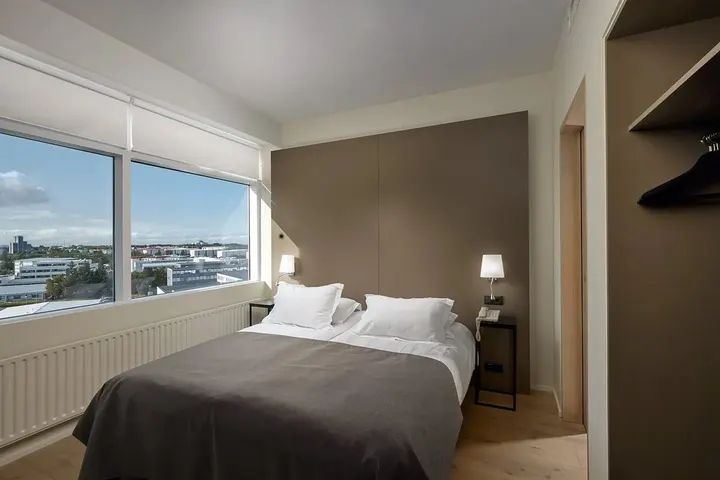
- When checking into a hotel, don't be surprised if the hotel collects a City Tax or Tourist Tax charged per person per night separately from the room rate. It is often not included in the room price—some hotels collect this upon arrival, while others include it in advance, so be sure to check your booking terms carefully.
- Most hotels in Europe allow young children to stay for free if sharing a bed with parents without an extra bed. However, breakfast must be paid for if requested, and children are still subject to City Tax / Tourist Tax.
- Bellhops/porters are only found in luxury or upscale hotels and are not common elsewhere. If there is a porter, you should tip them; a tip of 5 euros per bag is recommended.
- In hotel rooms equipped with smoke detectors, be careful not to use personal electrical appliances that generate smoke, and never smoke inside the room. Be very careful to avoid creating smoke, as you could face extremely high fines.
- Many hotels in Europe do not have air conditioning because the climate is cool or cold year-round in some cities. You should always verify before booking if you require an air-conditioned room.
- Don't be surprised when checking out: in most places, you do not have to wait for room inspection. Simply handing back the room key completes the check-out process.
- Elevators in many European buildings do not have door open/close buttons, as the doors operate automatically.
- If you need a hotel with an elevator, check the details before booking because many historic buildings lack elevators due to heritage preservation laws or local regulations.
- The 1st floor of a building is usually Floor 0 or Ground (G), while the 2nd floor is Floor 1.
- Restrooms at most gas stations in Europe are not free. You must pay before entering by inserting coins or tapping a credit/debit card. However, if a restroom inside a gas station convenience store is locked and you are a customer, ask the cashier for access and they will give you the key.
- Most McDonald's locations in Europe offer free Wi-Fi and free restroom access for customers. Check your payment receipt for the Wi-Fi password and restroom door code; you must enter the code on the keypad to unlock the restroom door.
- European culture does not mandate tipping, but leaving a tip is recommended, especially when you receive good service.
- You should wait at the restaurant entrance to be seated; ask the host or waitstaff first so they can show you to a table rather than seating yourself.
- Calling a server by shouting or waving your hand is considered impolite in Europe. Simply making eye contact and nodding to signal them is much more polite.
- Observe which server is assigned to your table, as waitstaff divide responsibilities by specific zones and tables. If you call someone who does not cover your table, they will usually not come over to serve you.
- Opening an umbrella for sun protection when it is not raining is considered very unusual in Europe, as umbrellas are only used for rain.
- In some European cities, bus stops feature USB charging ports—keep an eye out in case you need to charge your phone.
- Some areas are restricted to local residents' vehicles only, banning cars registered outside the area. Others restrict vehicle size—for example, small cars may enter, but larger vehicles such as vans and above are prohibited.
- Some attractions have designated parking areas outside pedestrianized tourist zones where vehicles are prohibited; you will need to walk into the site yourself. Parking lots can sometimes be far, and driving into restricted areas carries heavy fines.
Schengen visa application service – For inquiries, contact: Khun Wa
LINE: Click to add us on LINE: http://line.me/ti/p/~seeyouagainthailand
LINE: seeyouagainthailand
Planning it yourself?
What independent travellers usually book before they go, from providers that actually work
Thai language, pay in baht
Compare many rental companies on one page
Popular with Thai travellers, Thai-language pages

Museum and landmark tickets, ready on your phone
Compare every airline from Bangkok and pick your own destination city
Frequent deals, Thai-language pages, pay in baht
Partner links · we may earn a small commission when you book, your price stays the same
Let Rin design a trip for your group