Archaeological discoveries confirm that about 3,000 years ago, the land where Chi Thuan Subdistrict now stands was home to people of the Chenla era. The Chenla kingdom once had its center of power around the Suvarnabhumi basin. The prosperity of Chenla spread and moved along the Mun and Chi rivers, and many communities arose along both banks of these rivers, including the area where Ban Chi Thuan is located.
Ban Chi Thuan was originally a Khmer settlement, a city called "Nakhon Lamduan". The compiler states that its people moved from "Nakhon Luang Prabang". According to the original Lao manuscript of Phra Uppangya, translated into the Khmer language of Lan Xang, Wat Suan Tan or Wat Thung Si Wilai was the royal garden of Phra Ketratirat, the ruler of Nakhon Lamduan.
This garden bordered Non Phrik (Ban Maphrik) to the north, Kham Dun (Ban Hua Dun) to the east, Nong Hirat to the west, and Kamphaeng Luang (the city wall) to the south.
Later, Nakhon Lamduan fell into ruin. Phra Prathum Vetha, the ruler of Ubon, sent Thao Ngon Kham together with 150 households to travel up the Chi River to build a new town. They reached Non Lamduan Chang (Nakhon Lamduan) and saw a ruined city with a Khmer chief sitting guard. Thao Ngon Kham went in and asked whether it was an old city.
The Khmer chief then invited Thao Ngon Kham to build the town at this place. In 1781 (B.E. 2324), the first pillar was set in the ground as an auspicious beginning, and the town was named "Si Suan", which has since changed to the present-day name, Chi Thuan.
Planning it yourself?
What independent travellers usually book before they go, from providers that actually work

Thai language, pay in baht
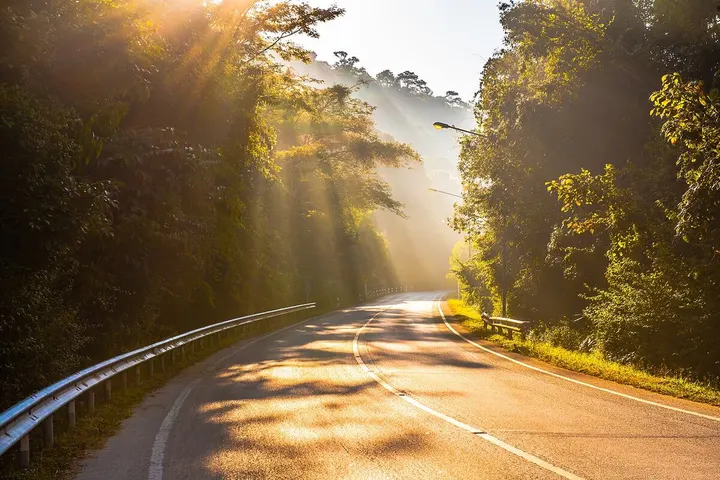 Photo: Nopparat thanatawan · CC BY-SA 4.0 · Wikimedia Commons
Compare many rental companies on one page

Popular with Thai travellers, Thai-language pages
Museum and landmark tickets, ready on your phone
Partner links · we may earn a small commission when you book, your price stays the same
Let Rin design a trip for your group